
Exterior & design of the 2027 BMW i3
- Embodies 'Neue Klasse' design philosophy
- Striking looks - but possibly divisive
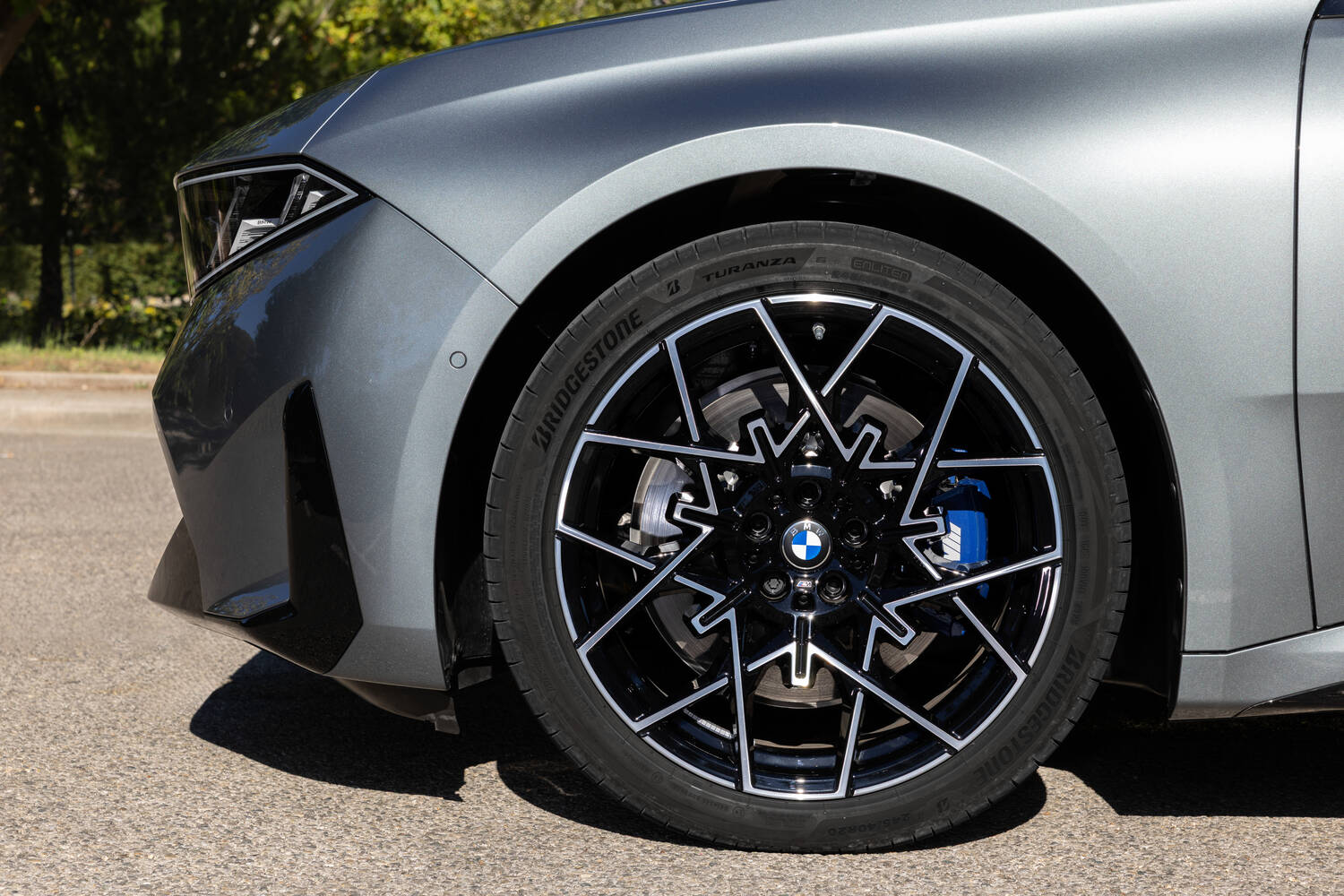
- 19-21-inch wheels available
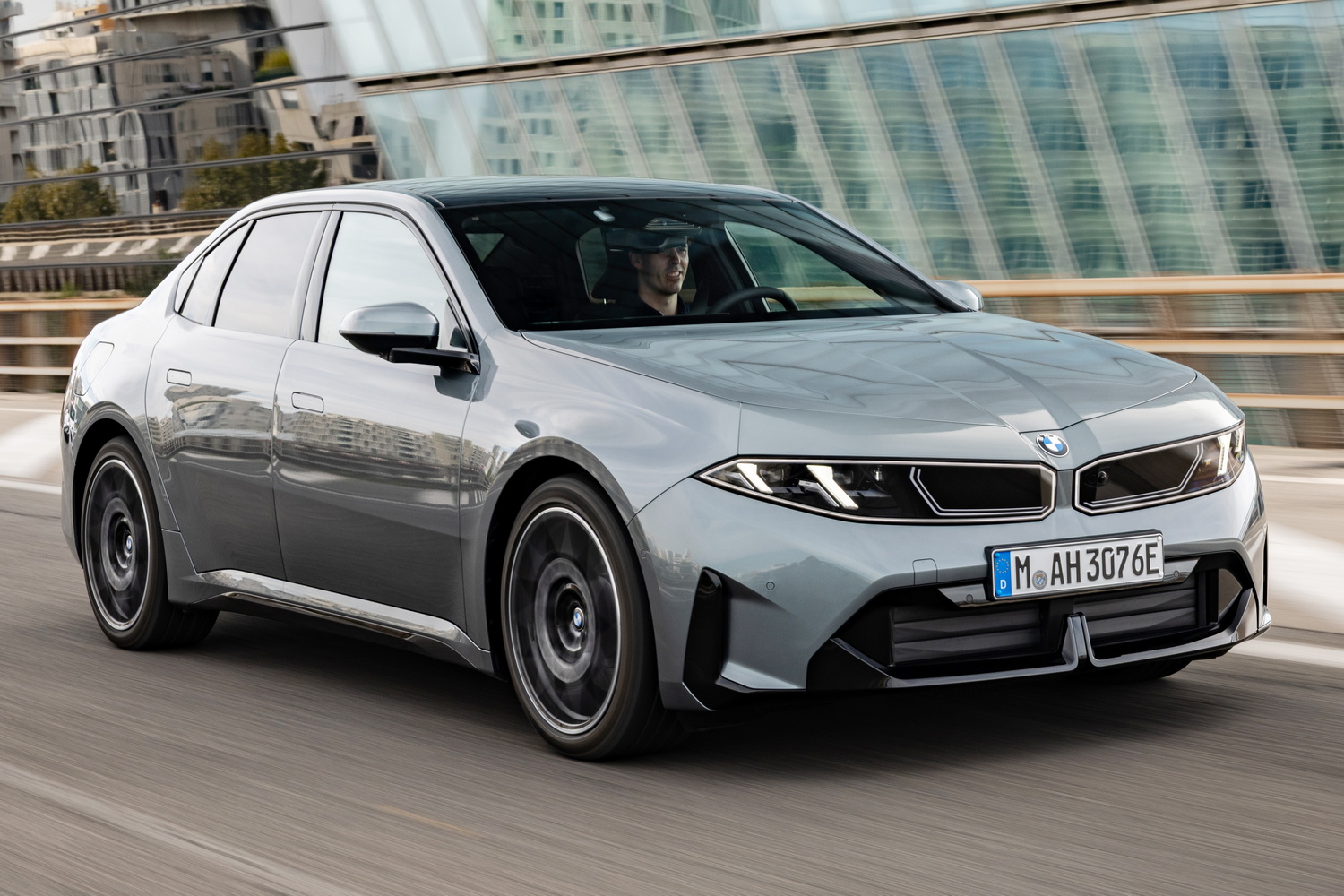
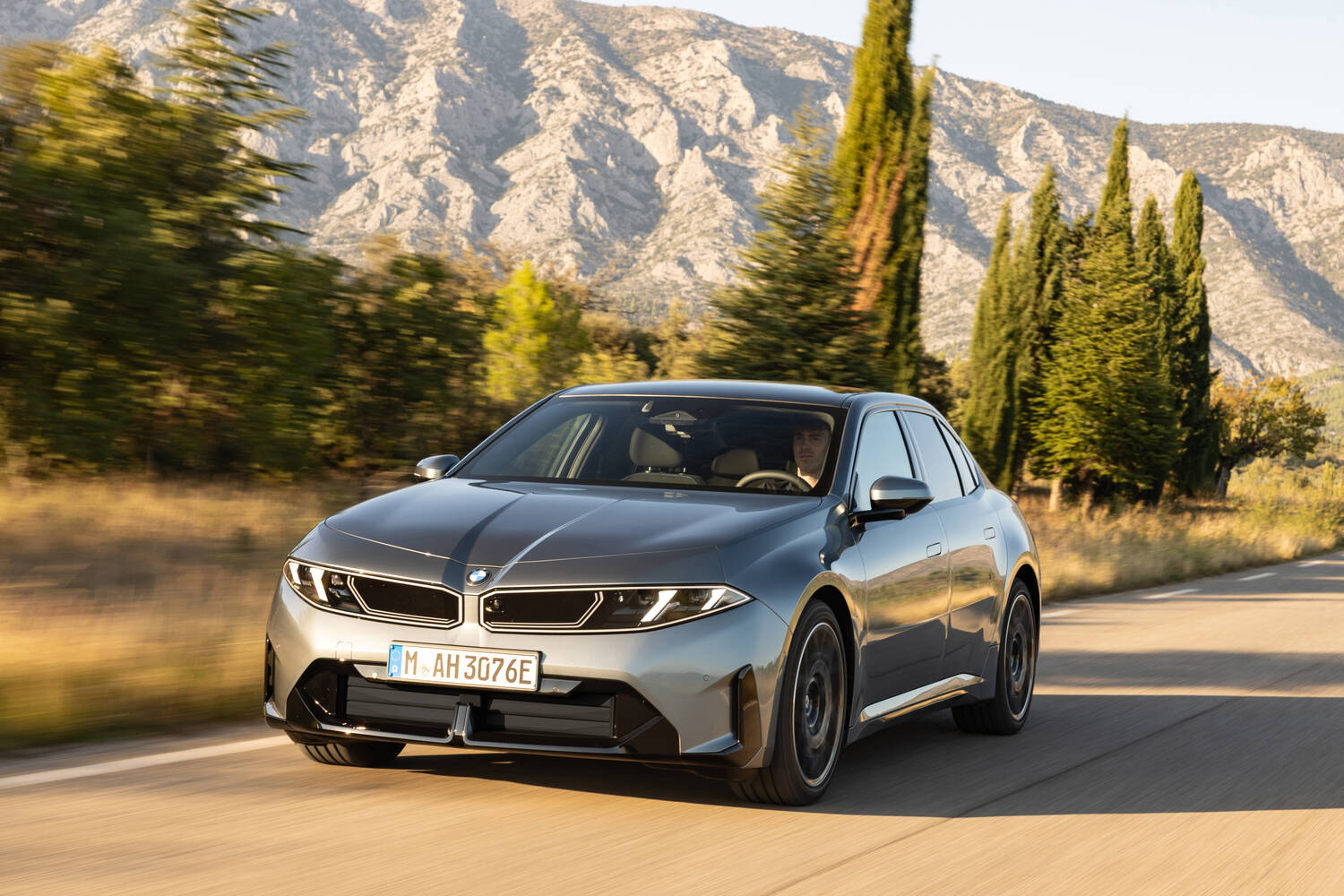
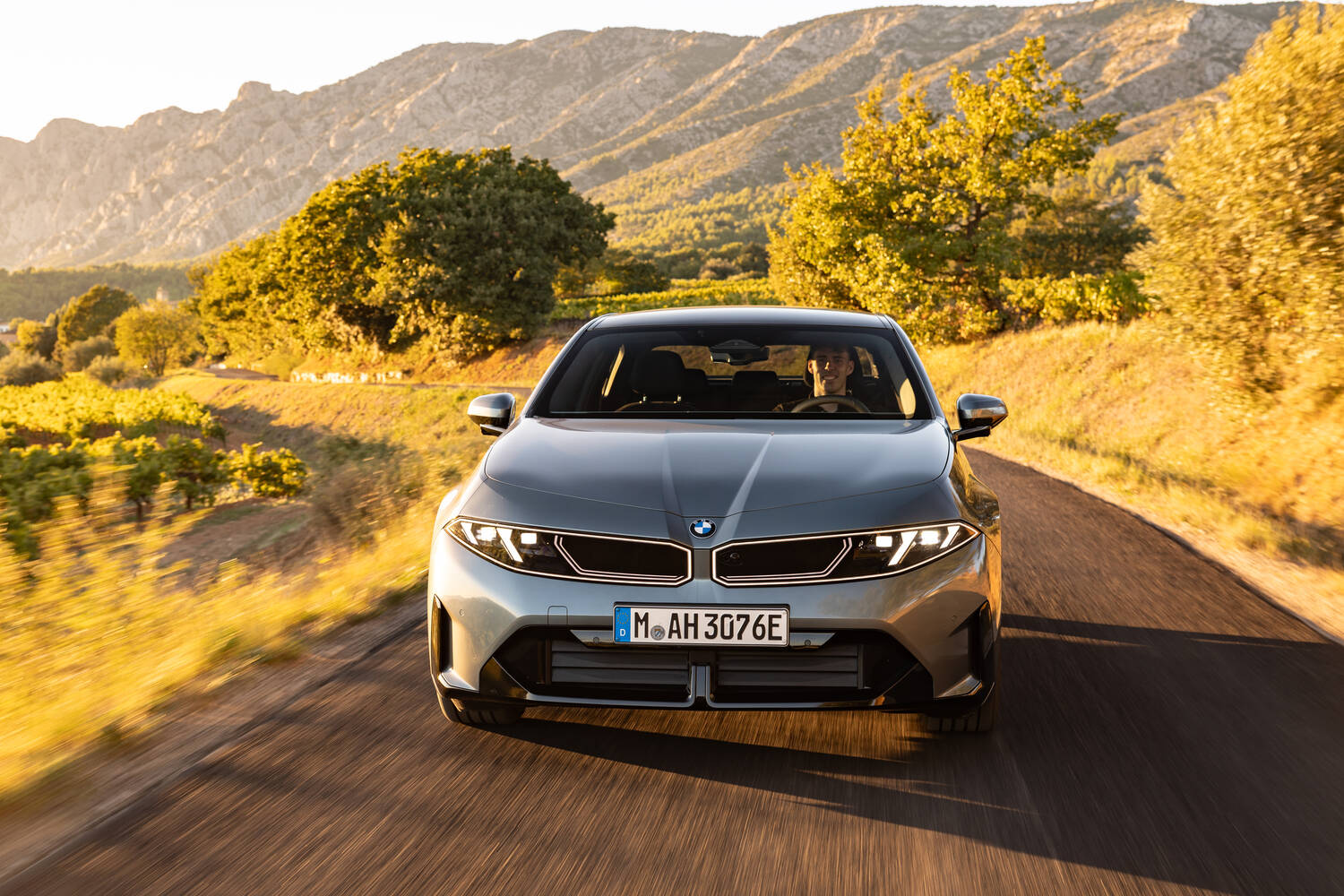
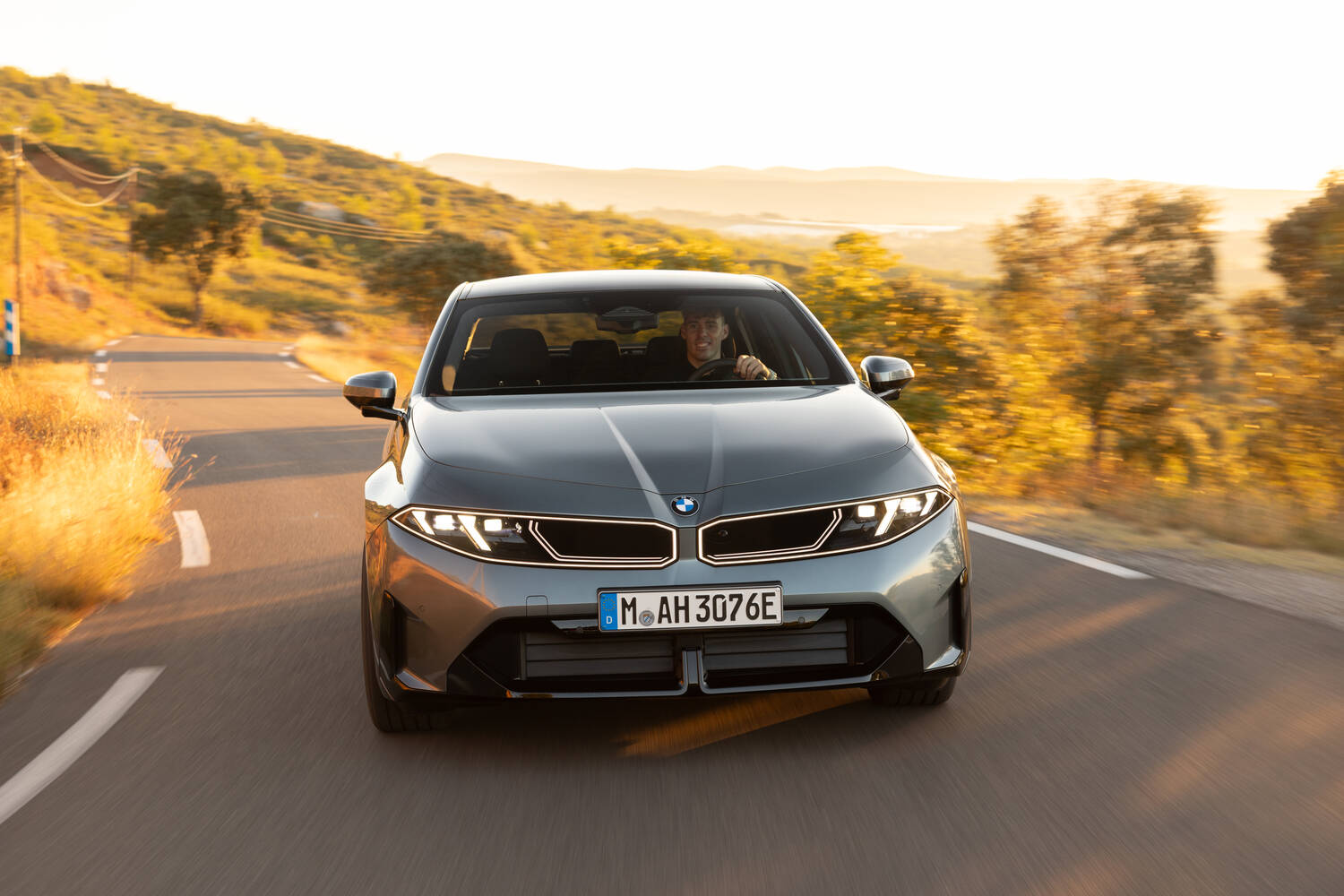
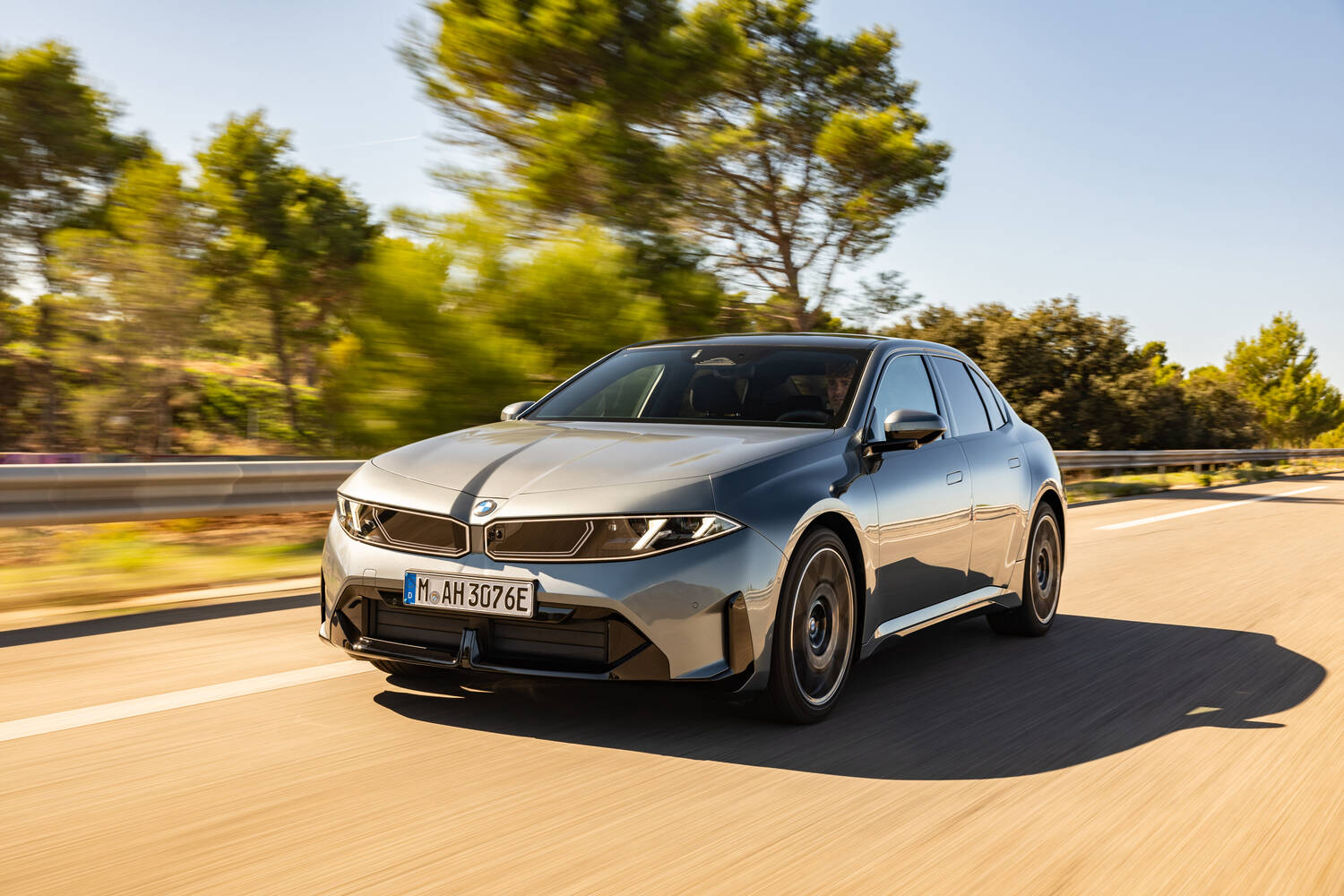
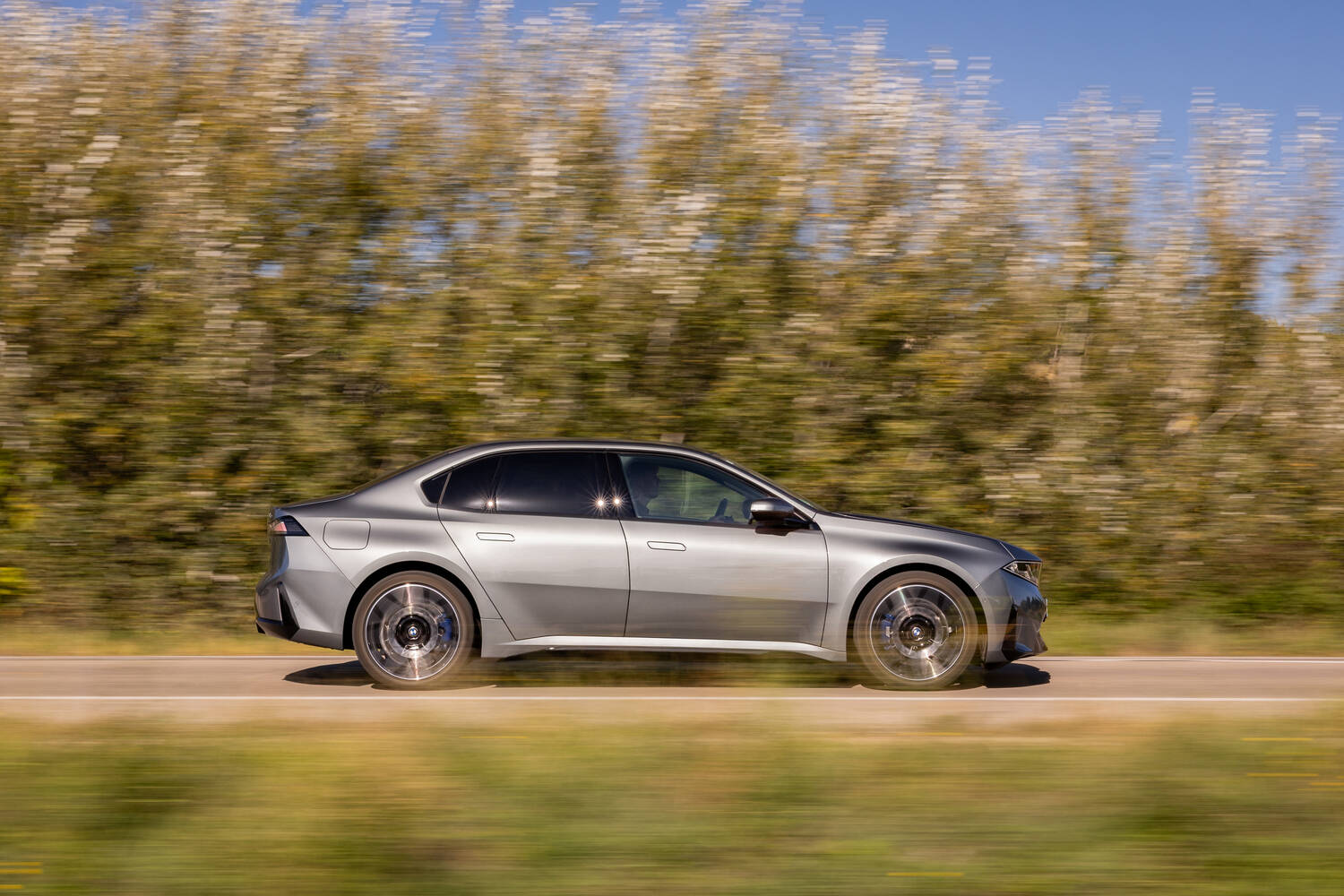
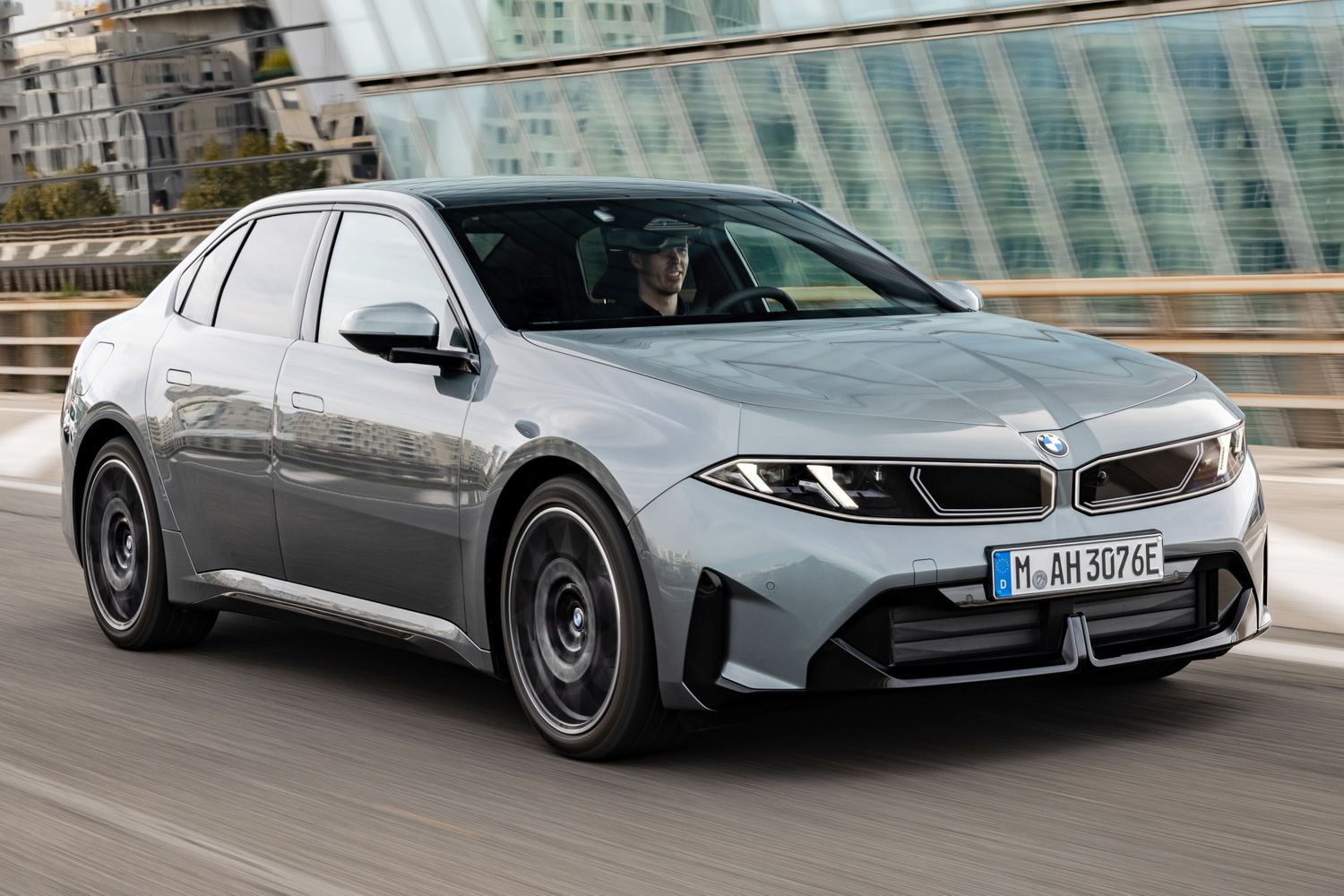
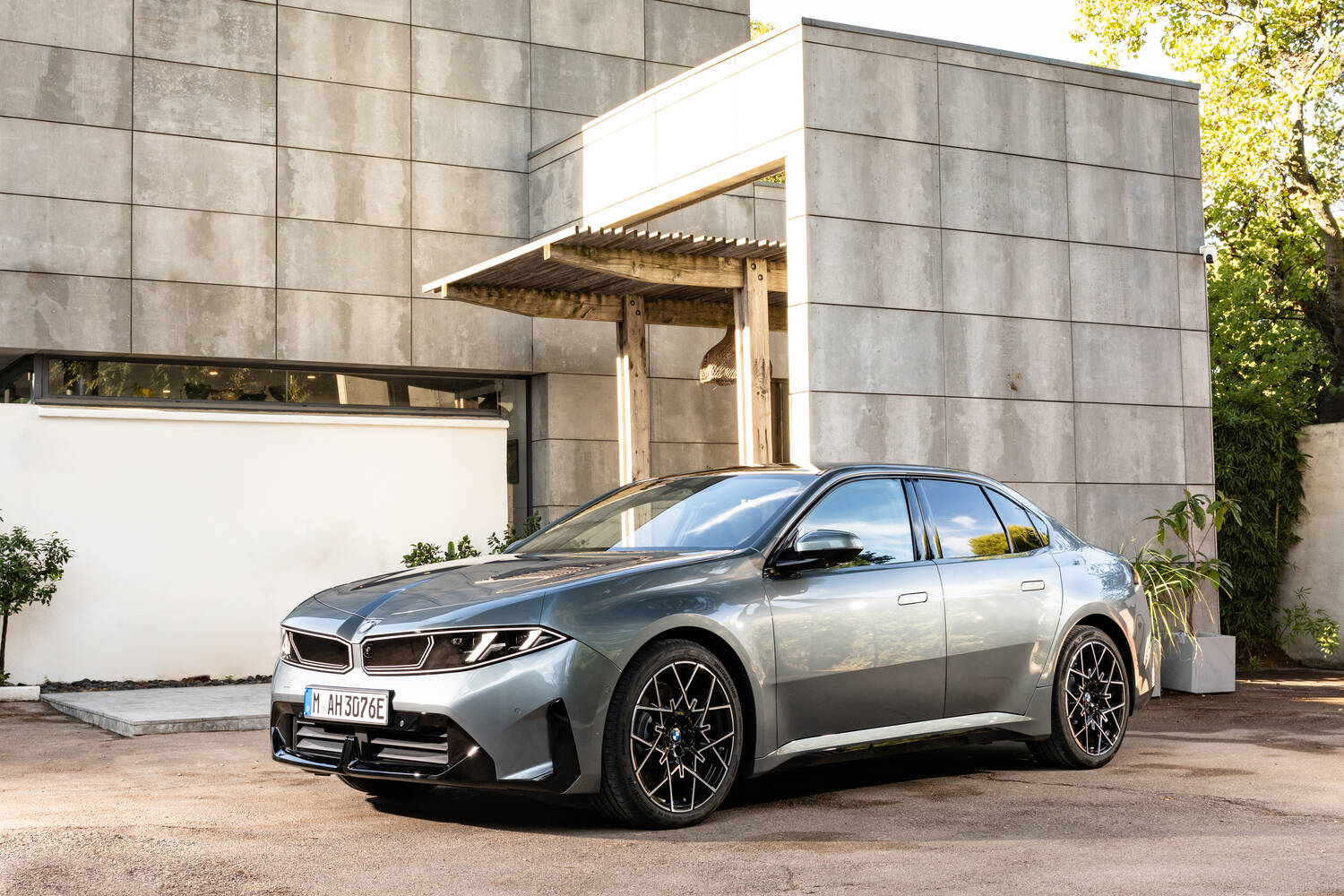
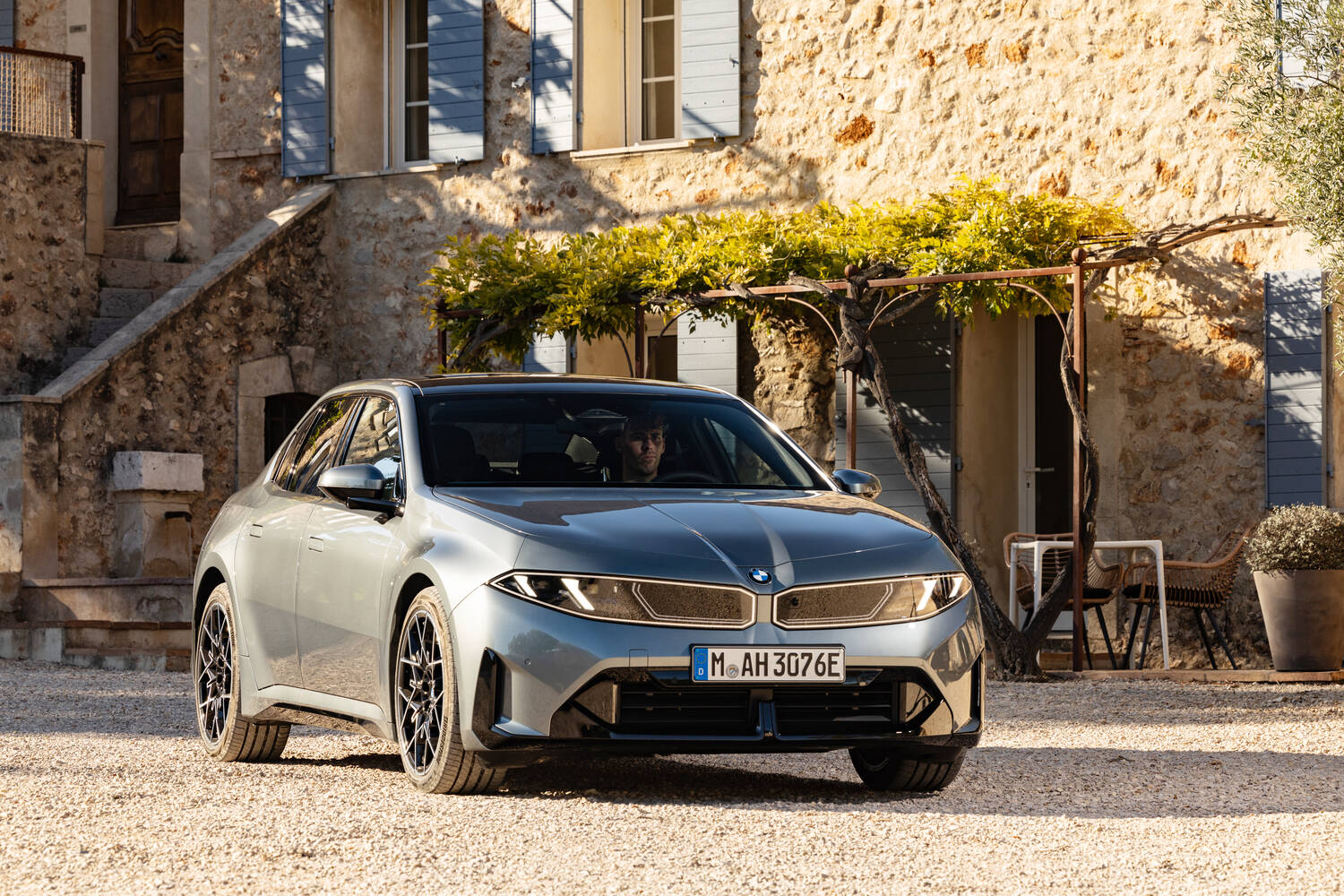
BMW released the iX3 and iX5 SUVs before the i3, but this is the first non-SUV to wear the angular 'Neue Klasse' styling.
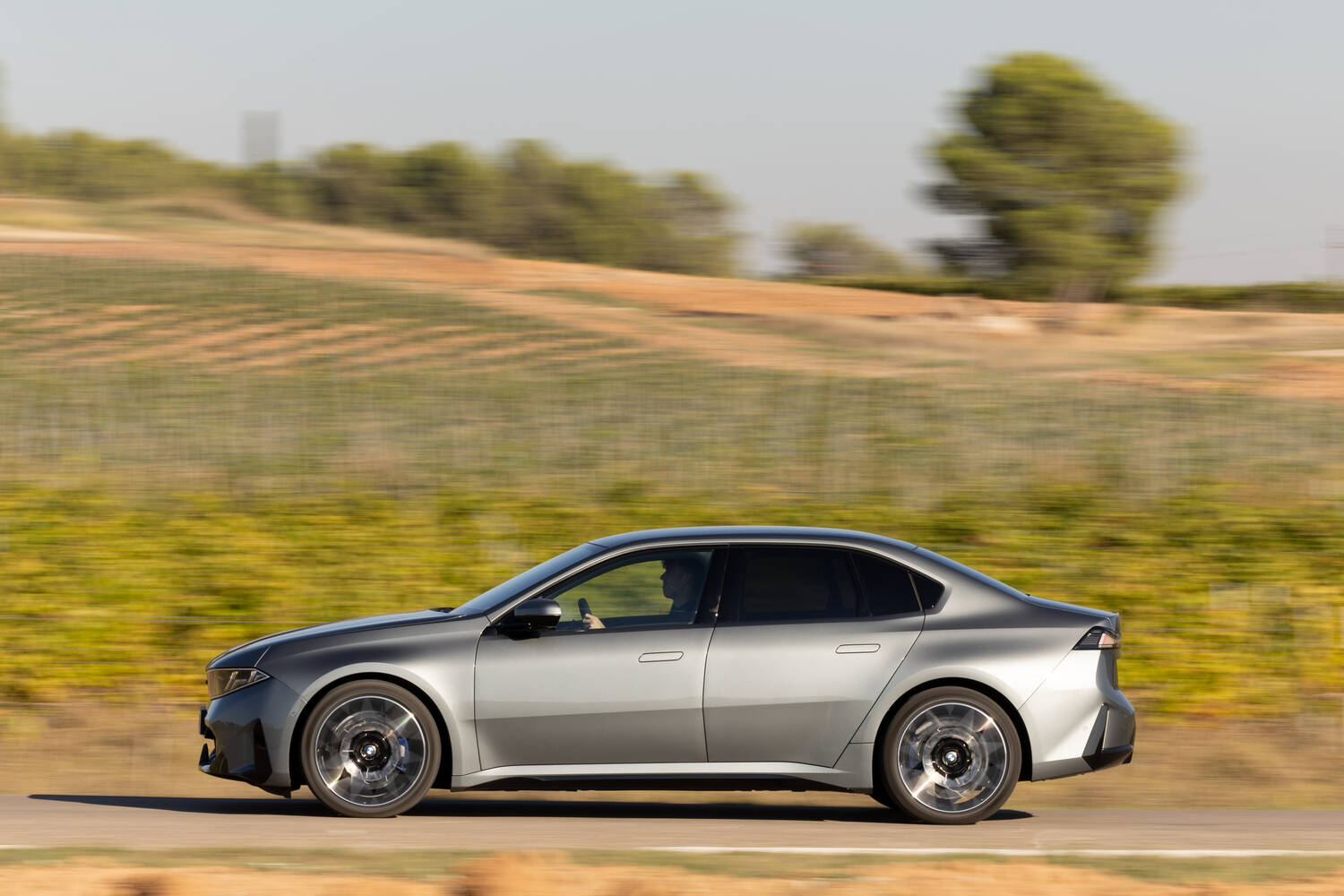
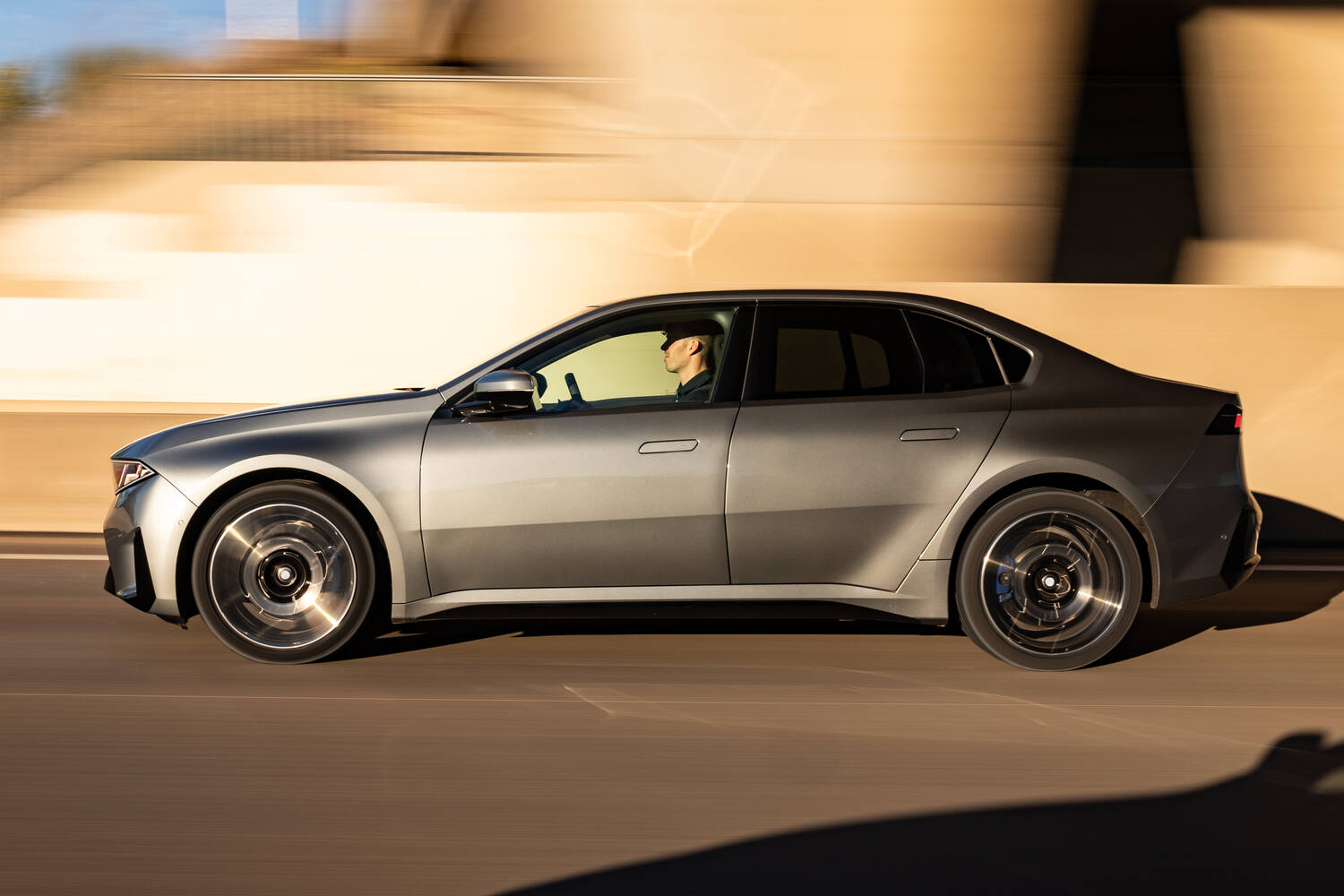
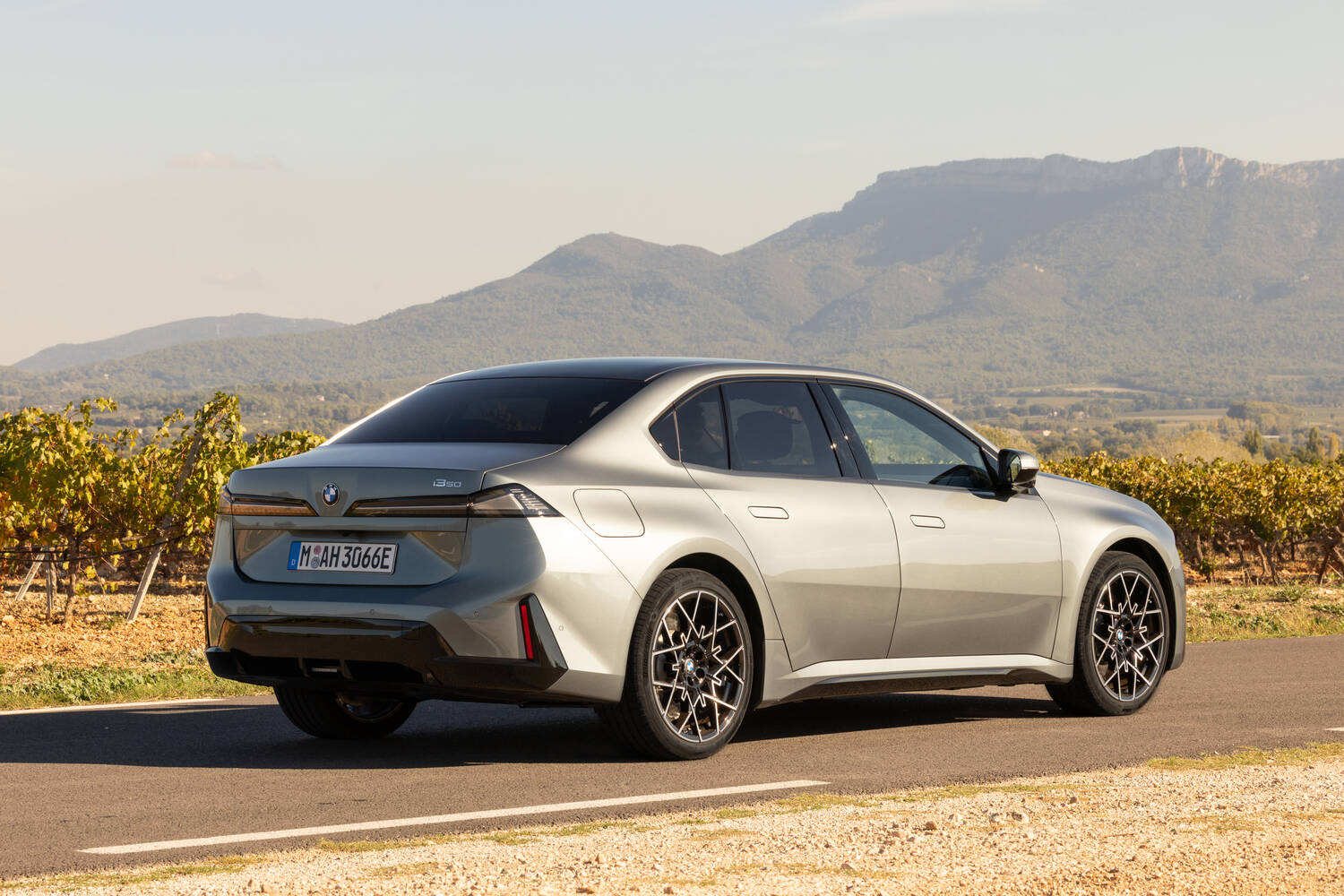
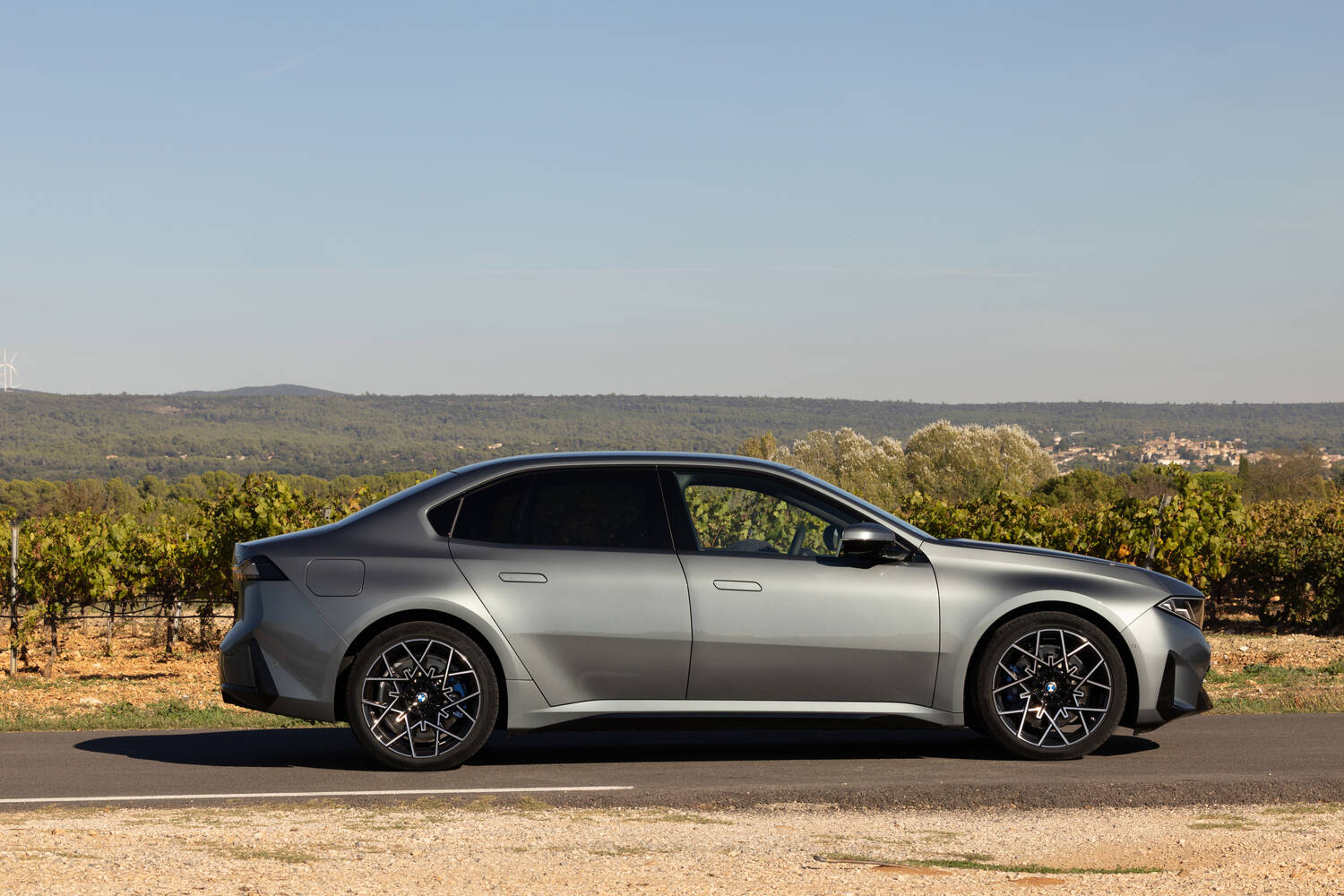
The German firm calls the silhouette of the i3 a "2.5-box" shape, mainly because when viewed from side-on, the boot looks quite stubby in relation to the other proportions.
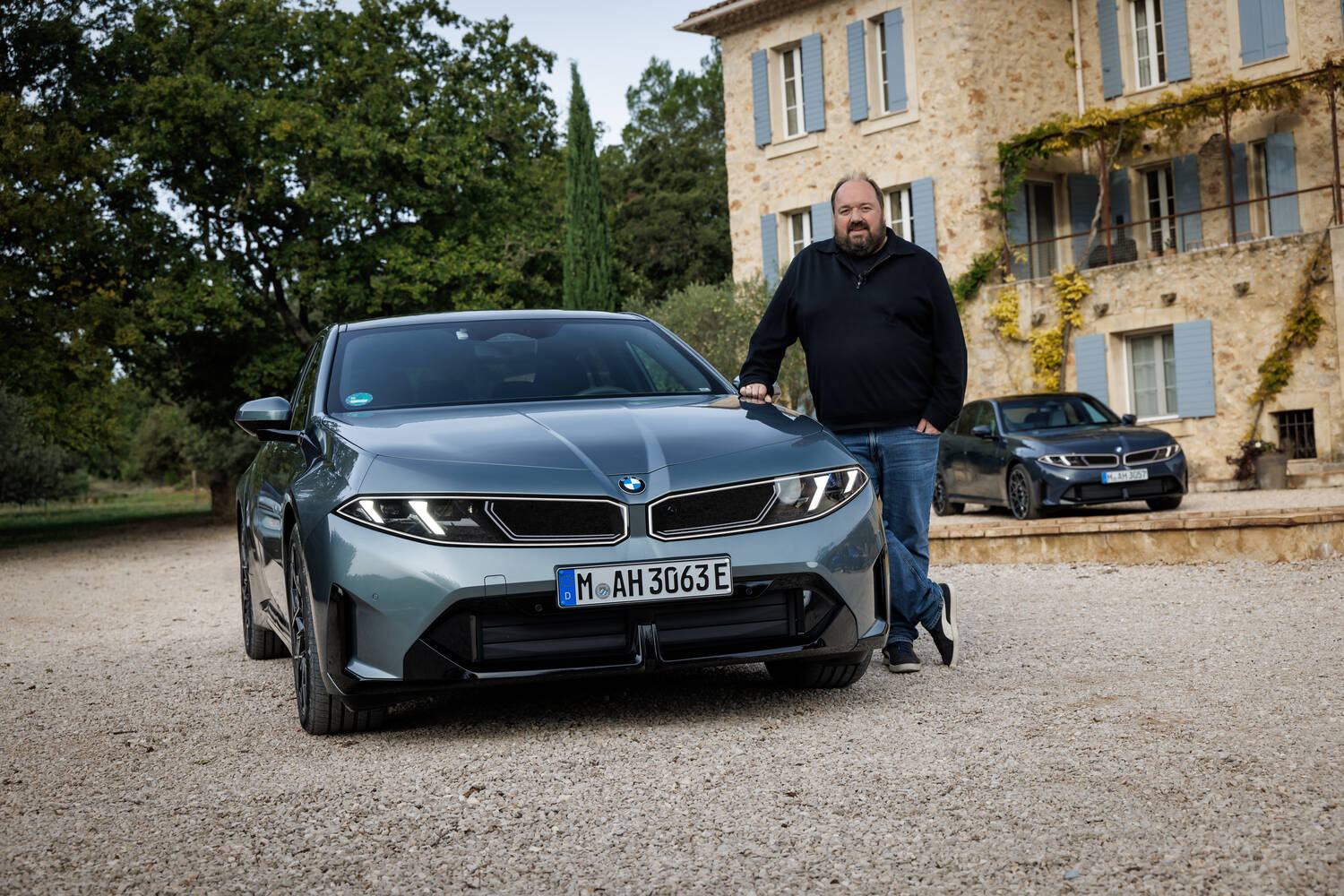
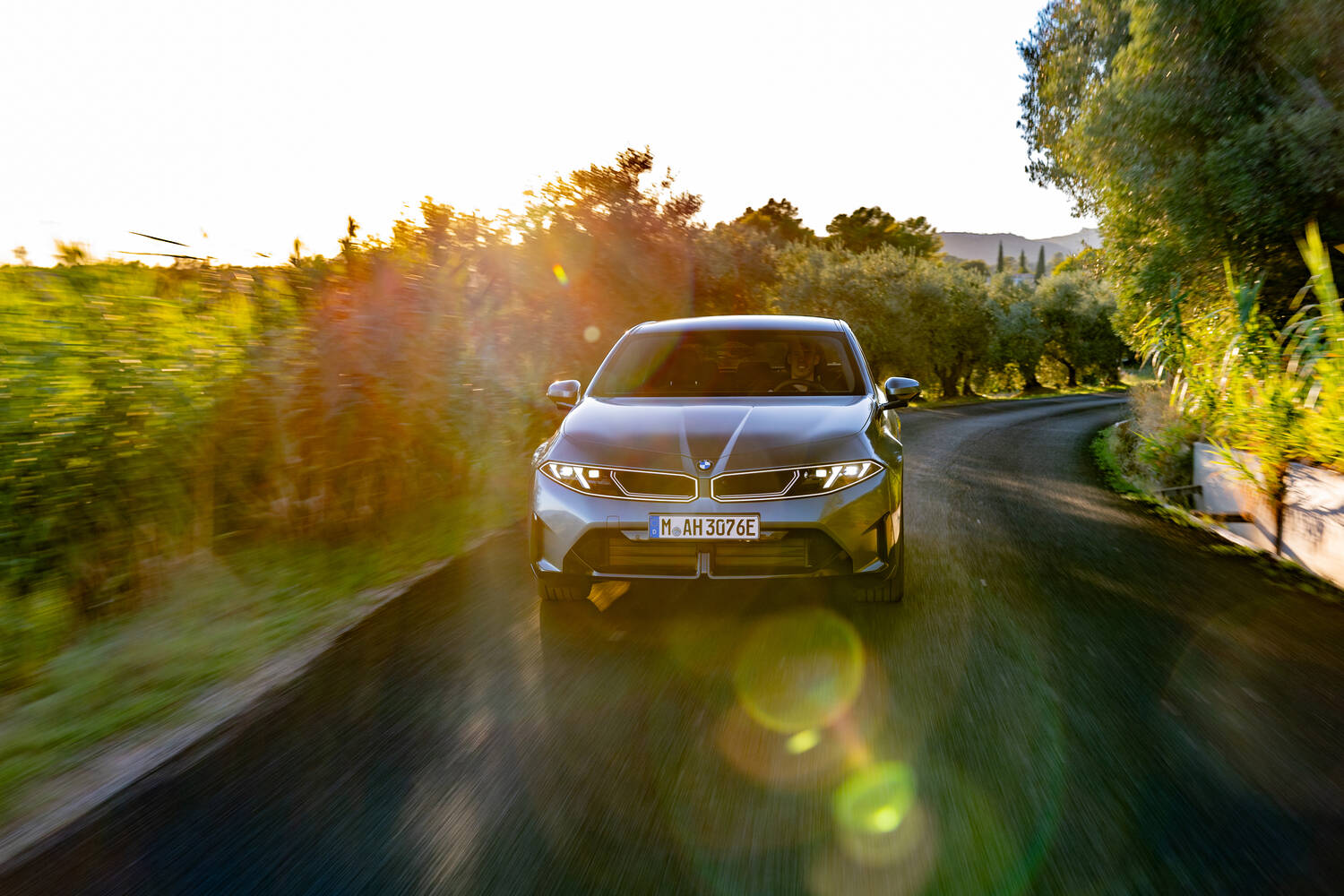
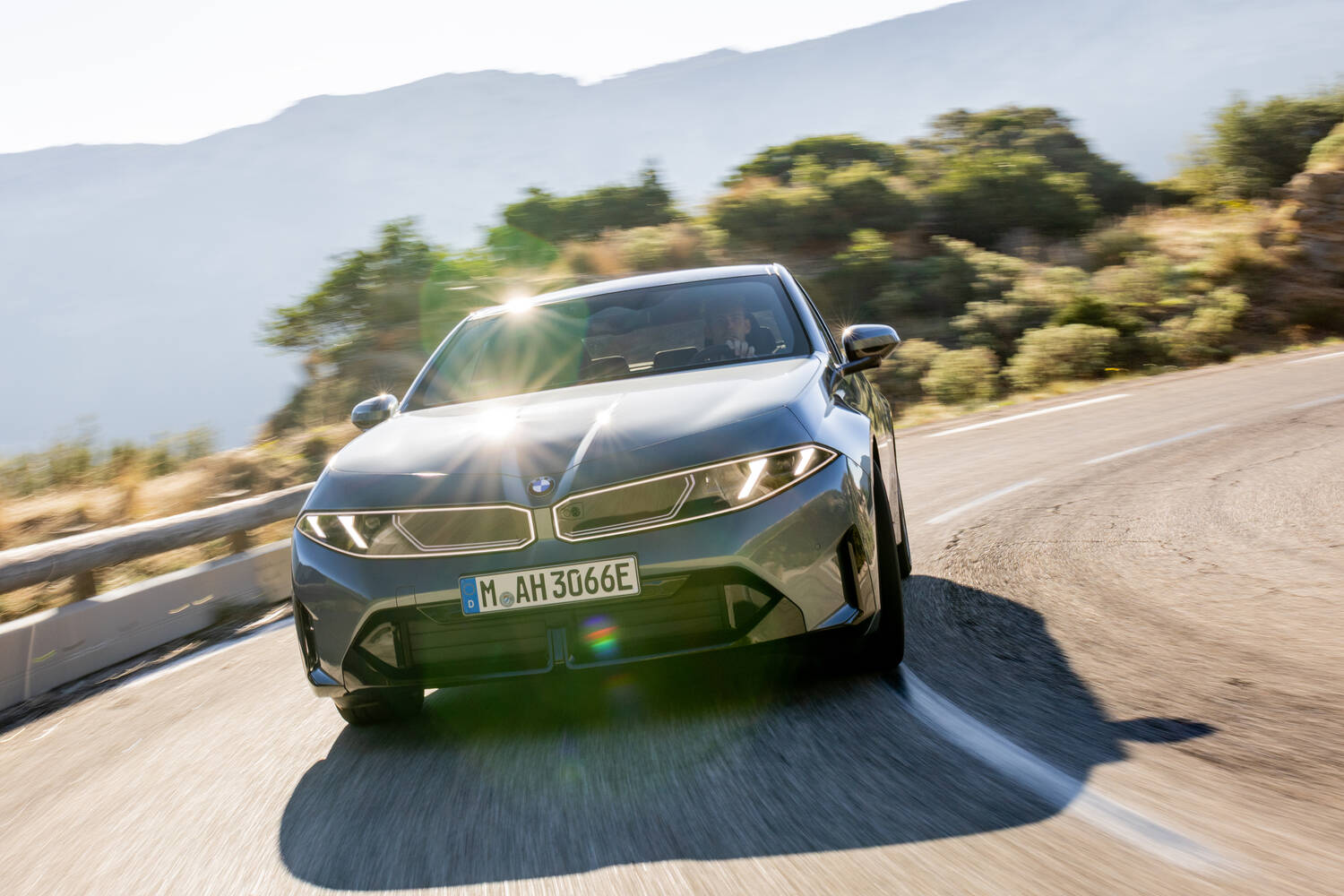
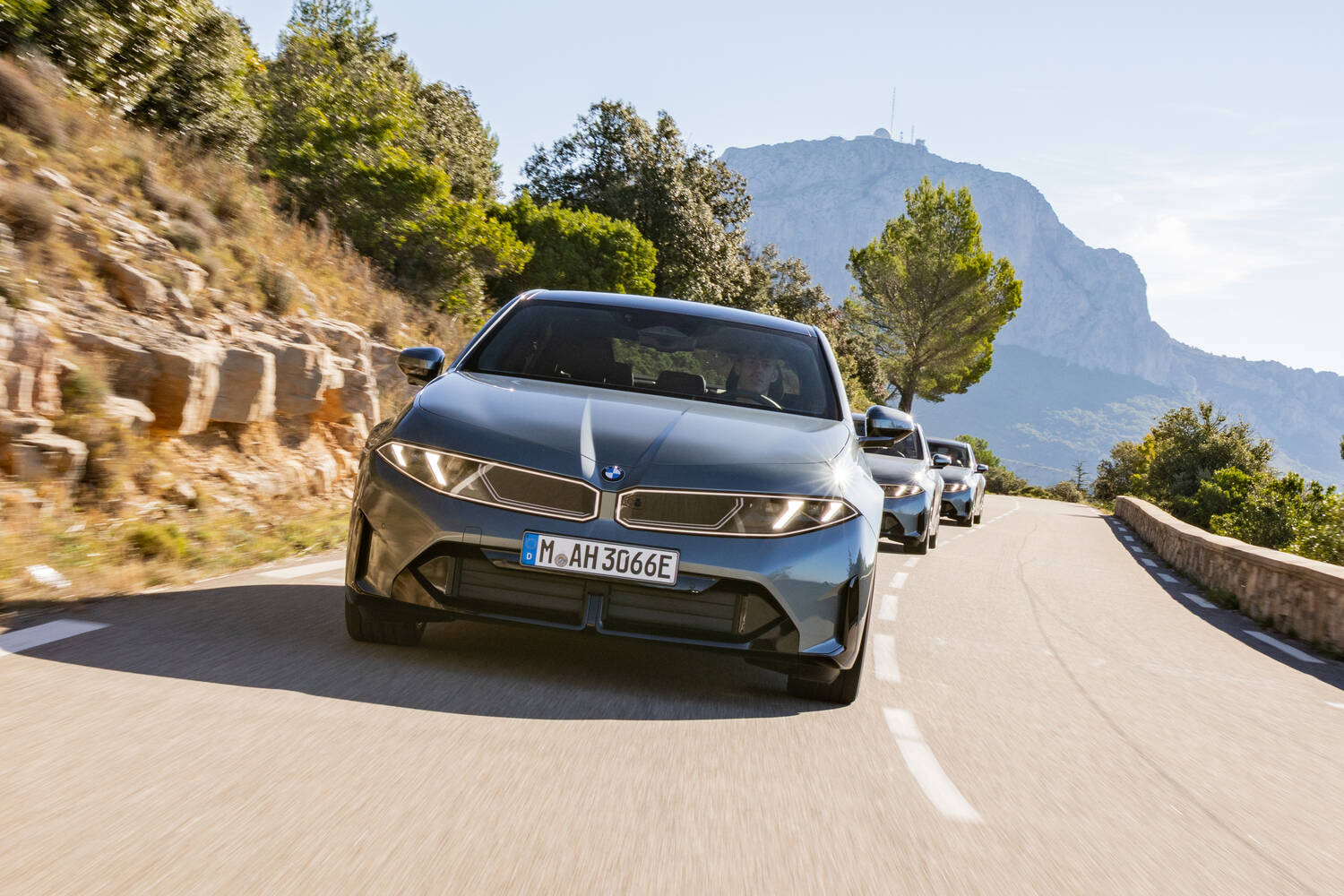
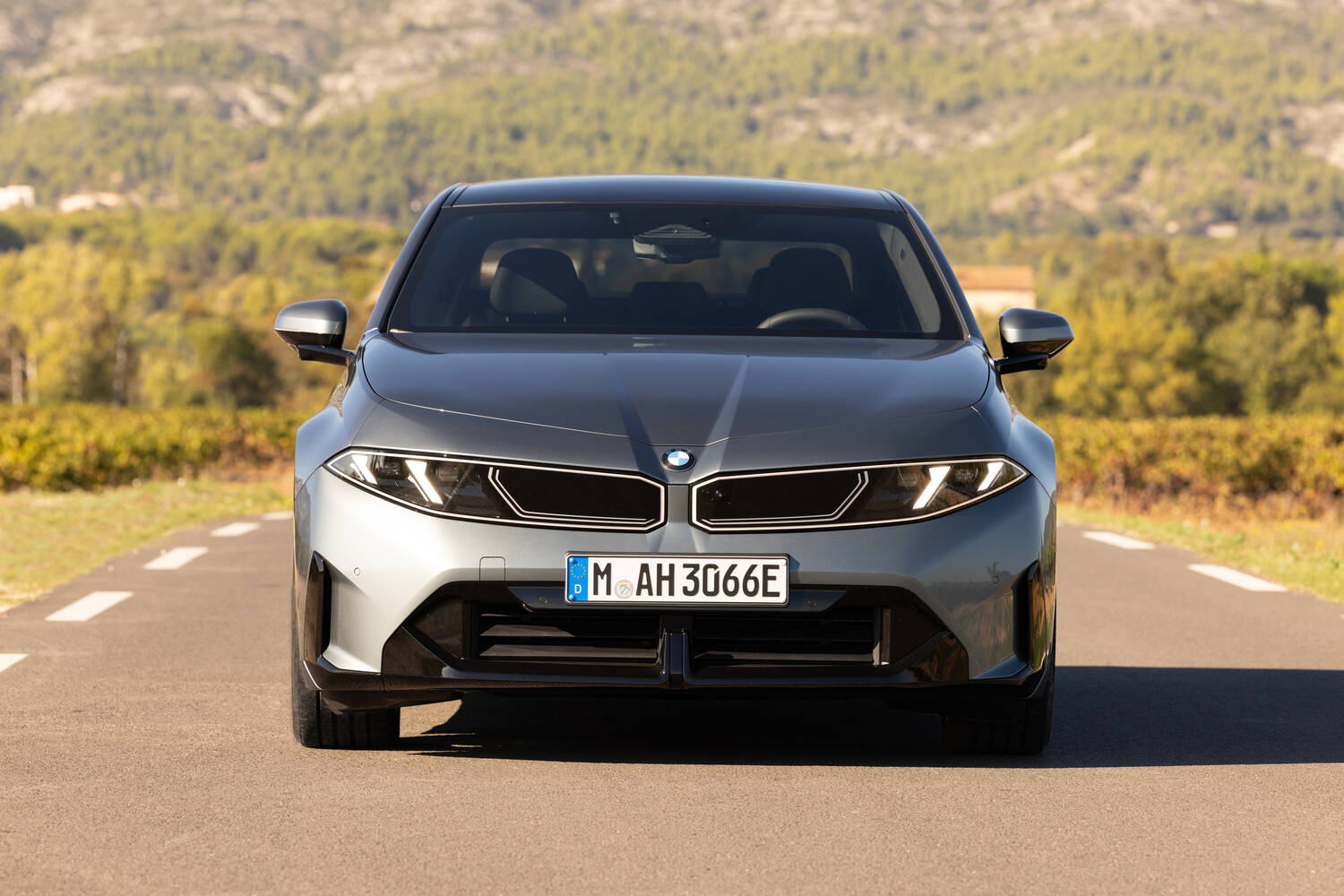
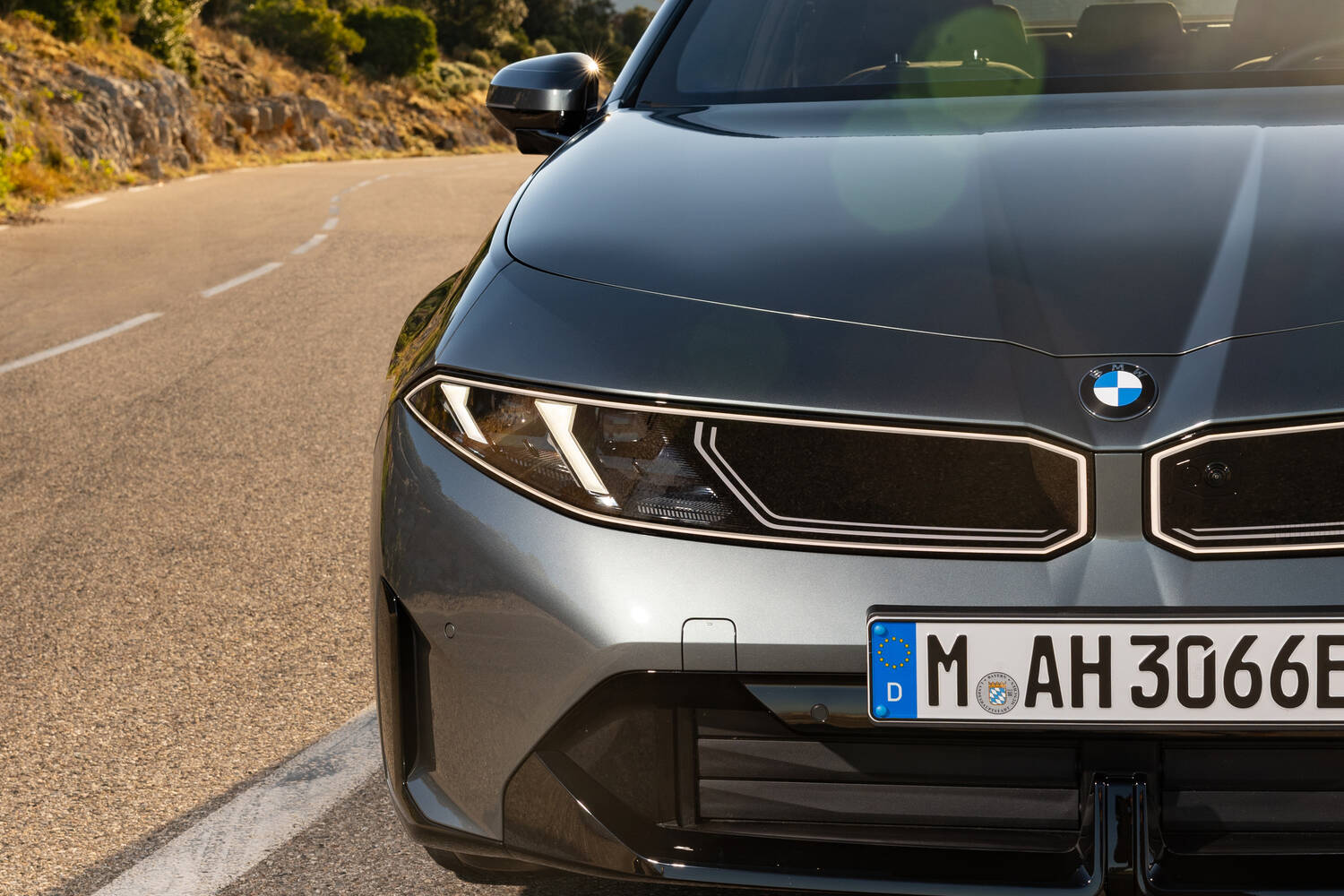
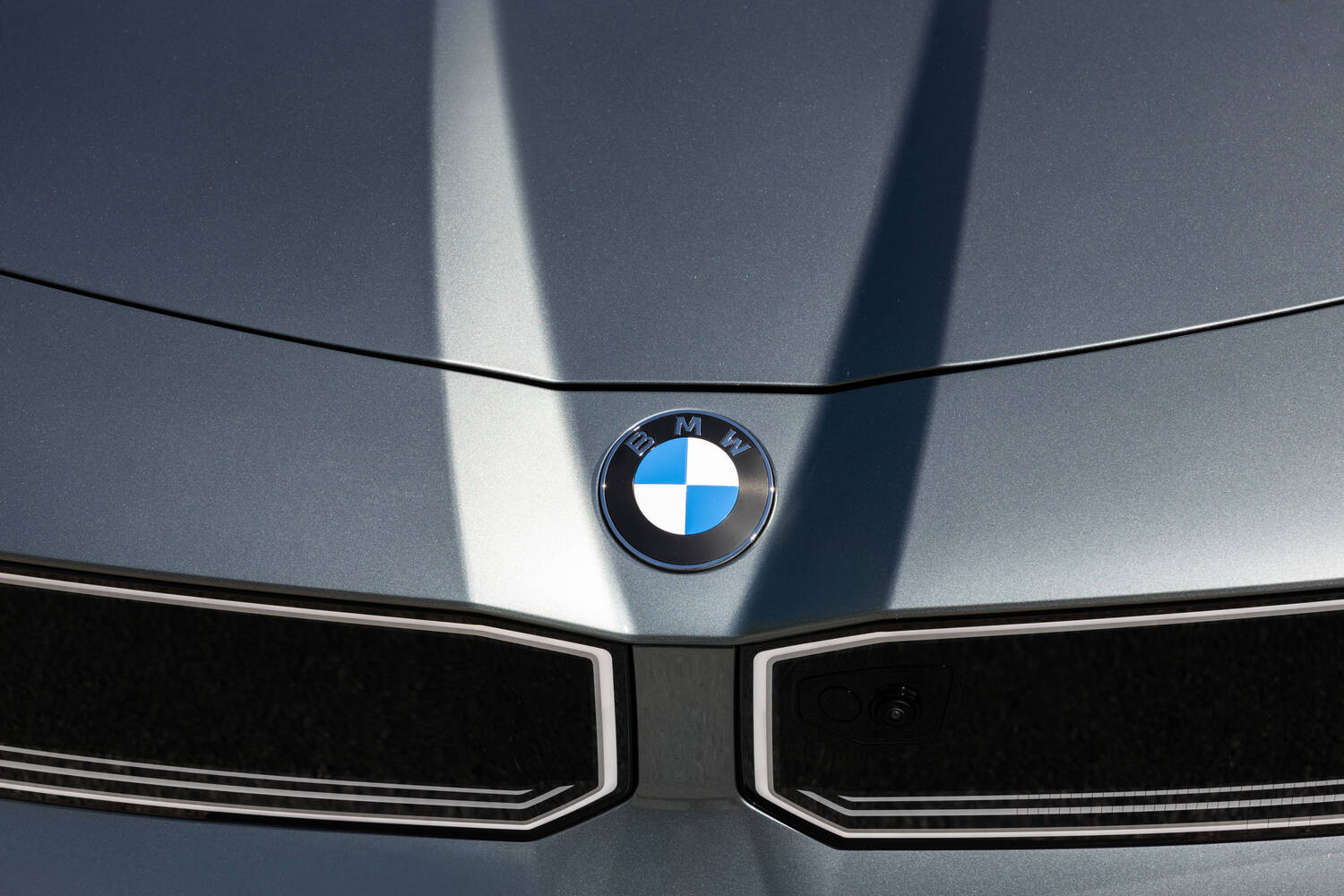
Nevertheless, it's an eye-catching piece of design and it arguably works best on the i3, where the enlarged kidney signatures have been turned into wide illuminated frames encircling the headlamps.
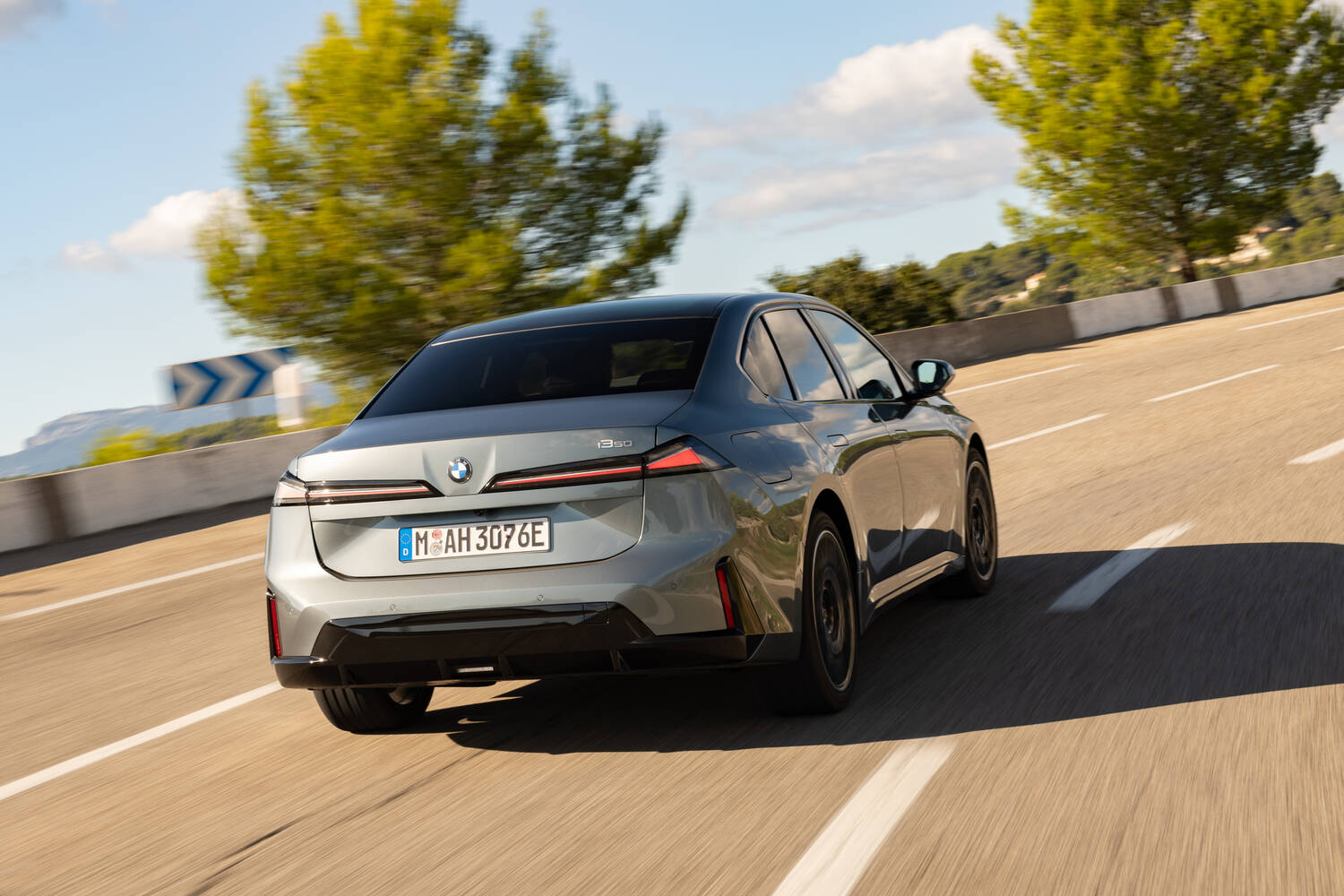
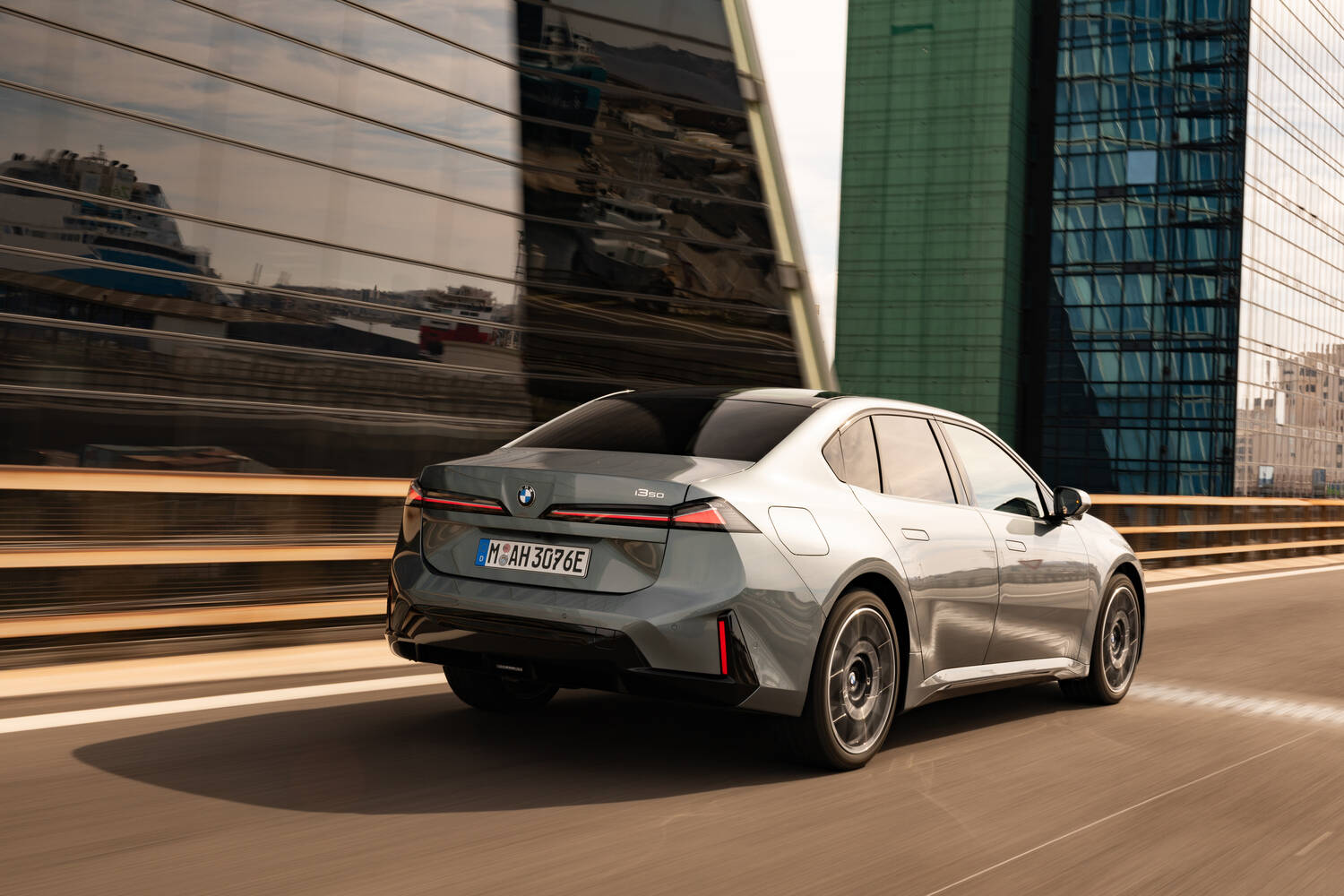
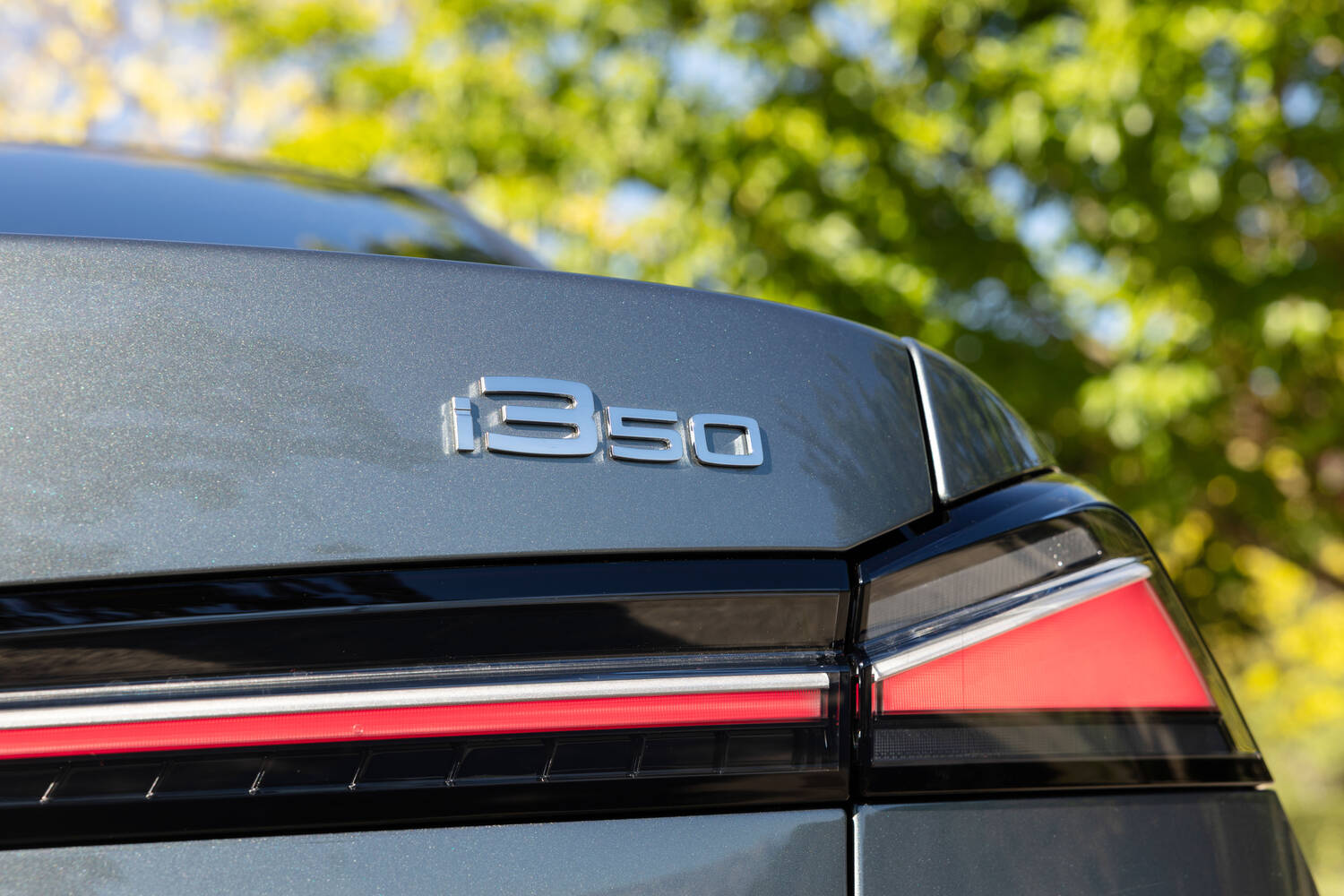
At the back are broad light clusters that almost meet in the middle, with a smoothed-off appearance helping the car achieve its impressive 0.21 aerodynamic coefficient-of-drag figure.
Alloy wheel sizes run from 19-inch items at the base level to an optional set of 21s on the higher-output models.
Dimensions of the 2027 BMW i3
- Length:
- 4,760mm
- Width:
- 1,865mm (excluding mirrors)
- Height:
- 1,480mm
- Wheelbase:
- 2,897mm
Paint colours for the 2027 BMW i3
There are 11 paints available for the BMW i3 range. The standard, no-cost finish is Alpine White, and from there the other options are Black Sapphire, M Le Castellet Blue, Mineral White, Brooklyn Grey, Space Silver, Fire Red, Polarised Grey, Ocean Wave Blue, Eucalyptus Green and then Frozen Space Silver.
Alpine White is a solid colour, the other nine regular finishes are metallic, and Frozen Space Silver has a matt-effect finish. The nine metallic colours cost €1,102 each, while Frozen Space Silver costs €3,243.
Interior, practicality, tech & comfort of the 2027 BMW i3
- Fab technological arrangement
- Superb material finishing
- Could be roomier in row two
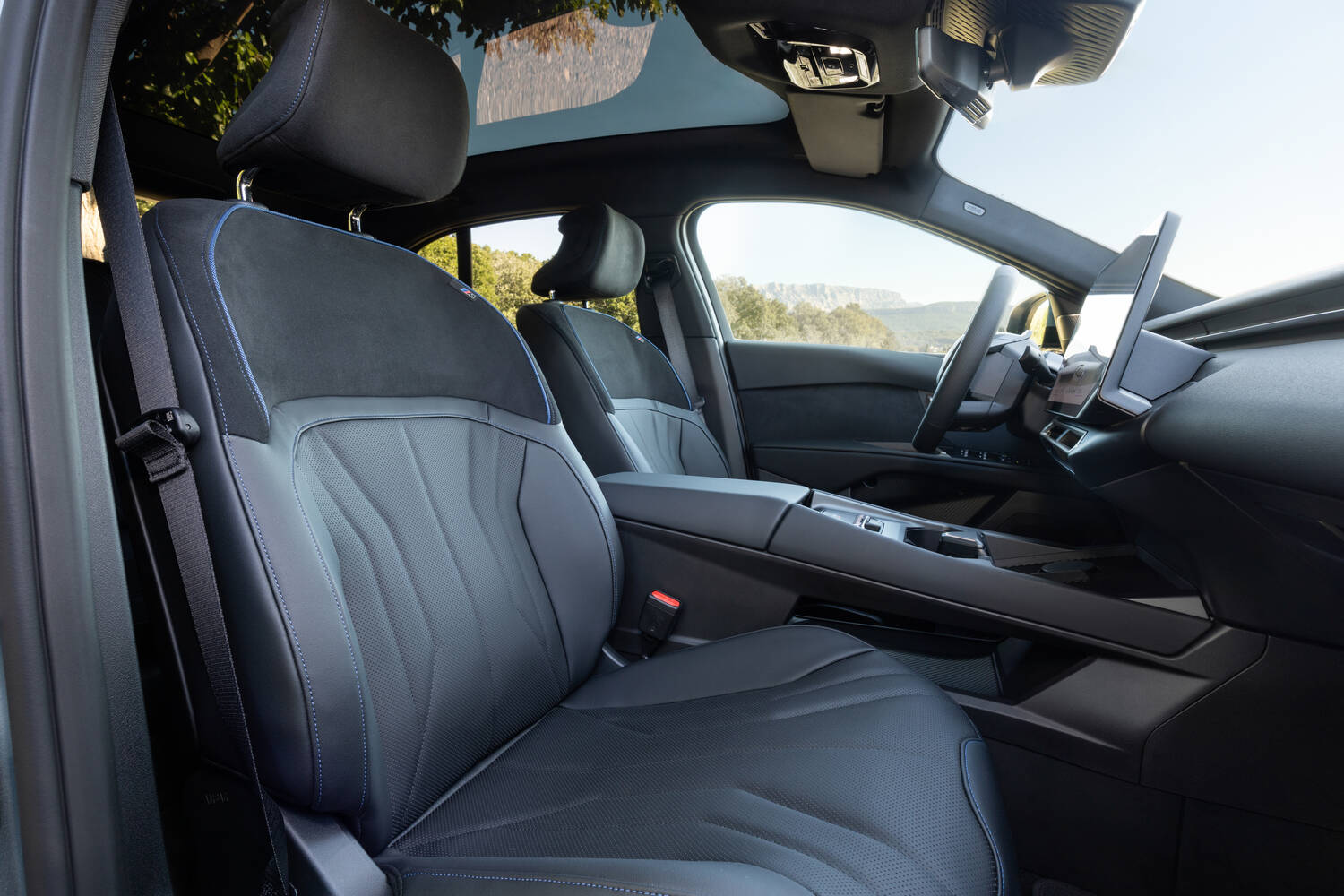
The standard of the upholstery, fixtures and fittings BMW uses in the i3 is uniformly excellent, with our only slight reservations on the quality relating to the column stalks - they feel a little less solid than everything else.
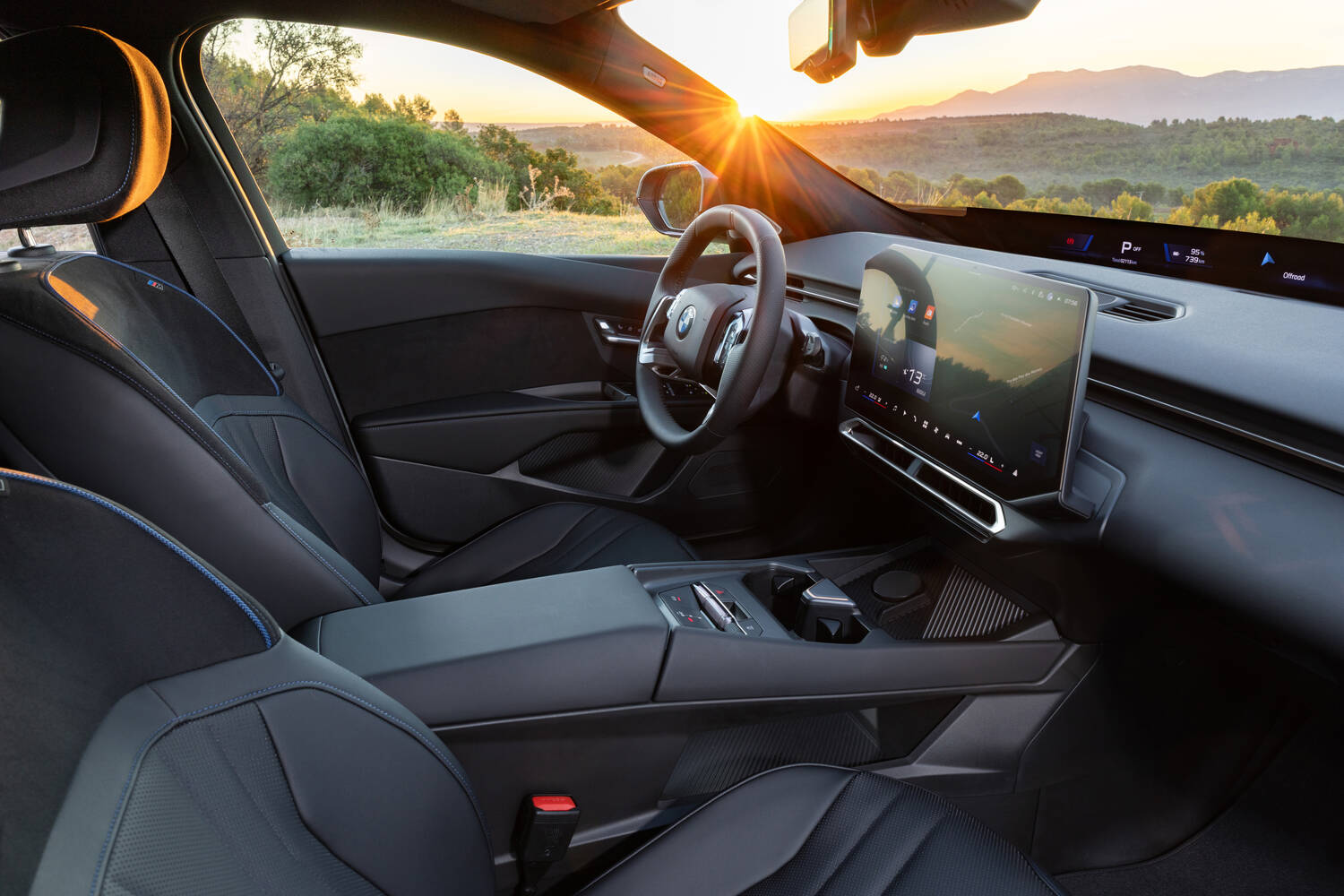
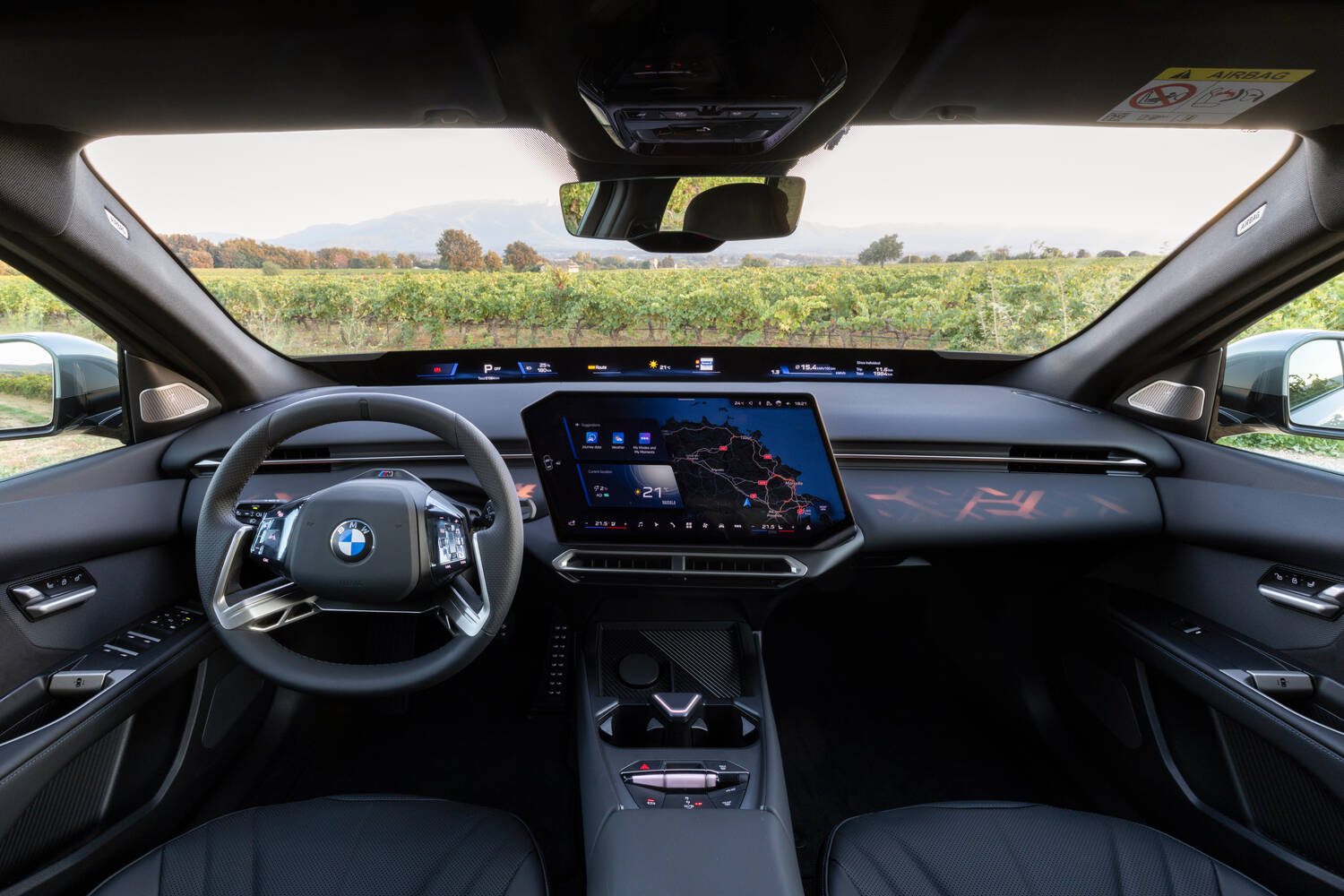
Other than that, it's the remarkable interface inside the i3 that will dominate the conversations of most occupants of the car, although we would say those sitting in the back might crave a little more room than the BMW can provide.
Getting comfortable in the driver's seat
Every model of the BMW i3 comes with electric front seats with a memory function, as well as a reach-and-rake adjustable steering column.
There is, as a result, a wide range of adjustment available to cater for a variety of drivers, and we also didn't notice much of a problem with visibility out of the glasshouse in any direction.
Infotainment and technology
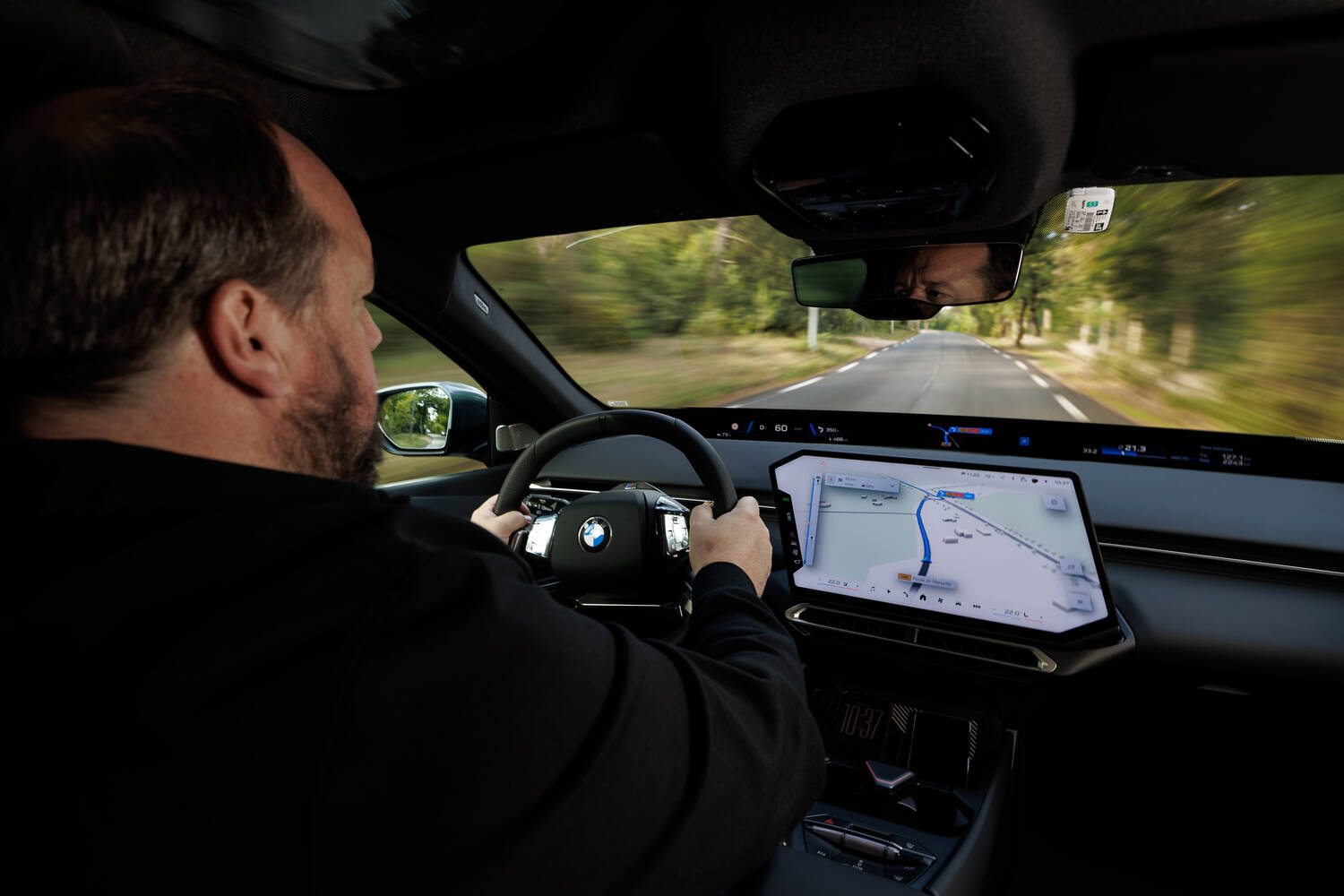
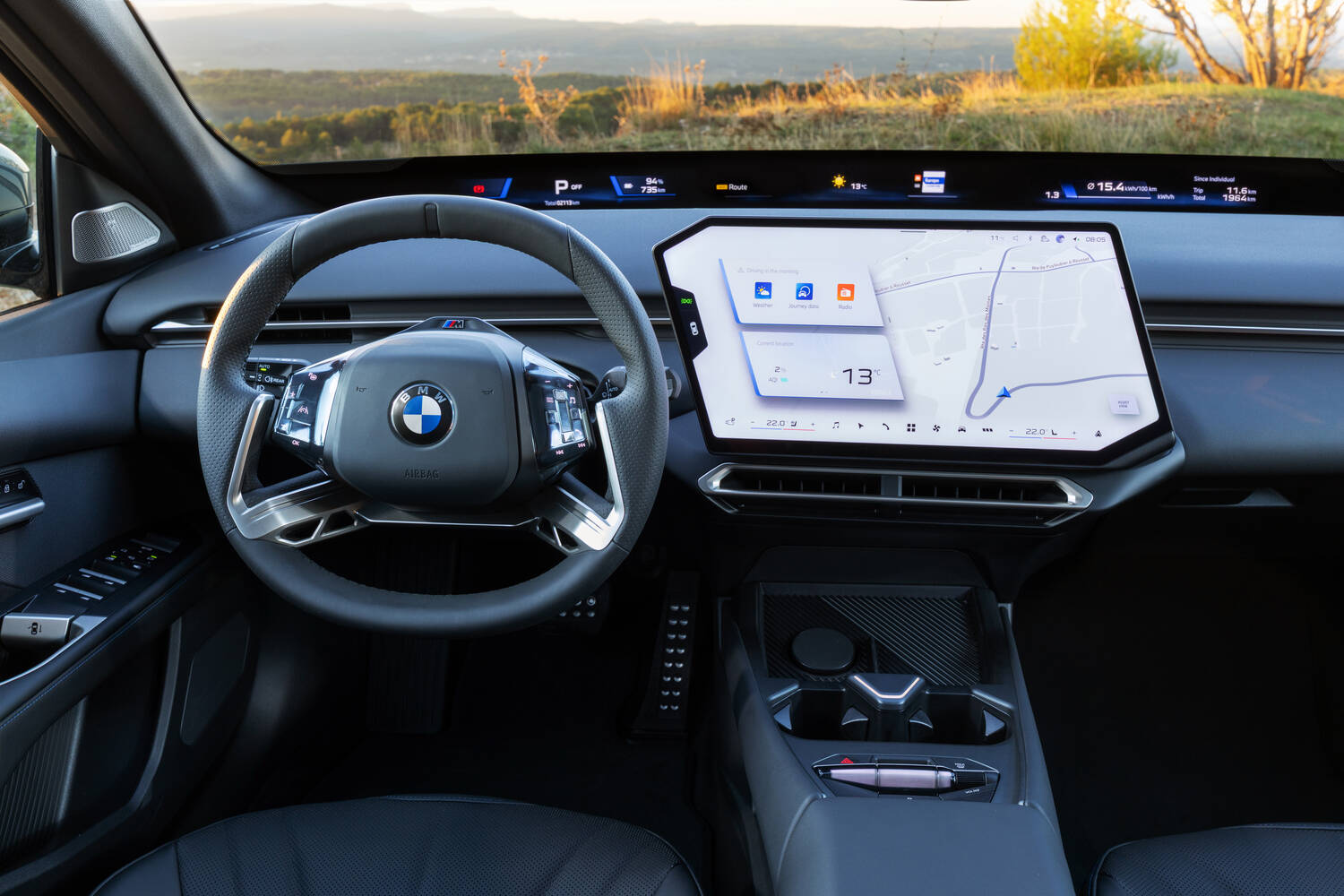
It's hard to miss the technology in the BMW i3, as it completely dominates the fascia. The 17.9-inch 'free-cut' Central Display would normally be a talking point on its own, as it is huge and angled 3mm further towards the driver in the i3 than it is in the BMW iX3 SUV.
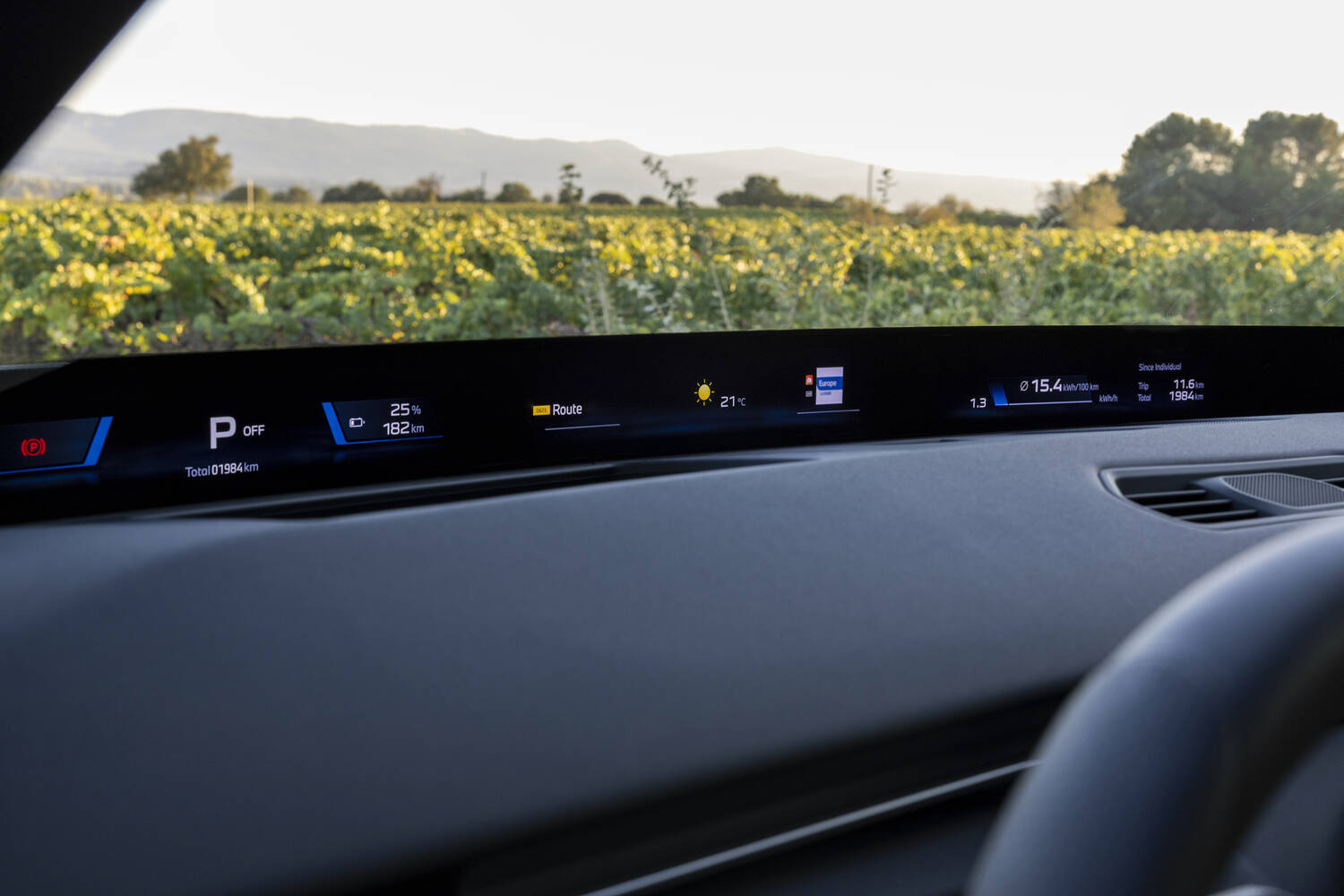
A brilliant, crystal-clear and highly useful 3D head-up display is another tech boon, but both it and the touchscreen are overshadowed by the Panoramic Vision strip at the bottom of the windscreen.
Running the full width of the dashboard, this is a real differentiator for the i3 in this class of electric vehicle, and it turns out to be a wonderful conceit in terms of how it presents its information so clearly.
The way this whole iDrive arrangement operates is largely very intuitive and sensibly laid out, but having the climate controls and heated-seat and steering-wheel functions to the central display is a minor ergonomic misstep, even if the preceding Mk7 'G20' BMW 3 Series had them on the touchscreen too.
There's a 15-watt wireless smartphone-charging tray with cooling on all versions of the i3, but if you want the uprated Harman Kardon sound system or the truly brilliant Motorway Assistant, then you need to spend extra at ordering time.
Practicality around the cabin
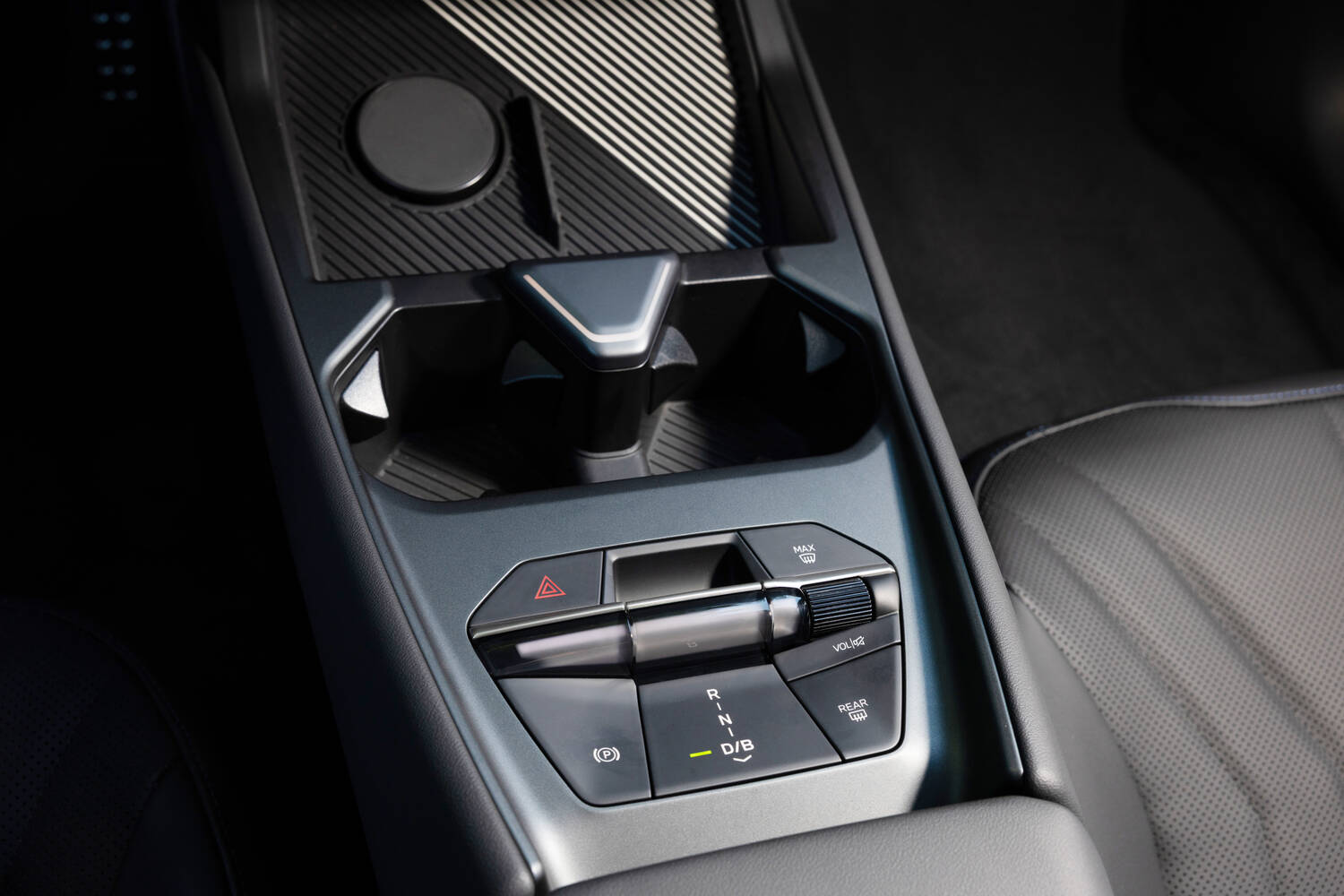
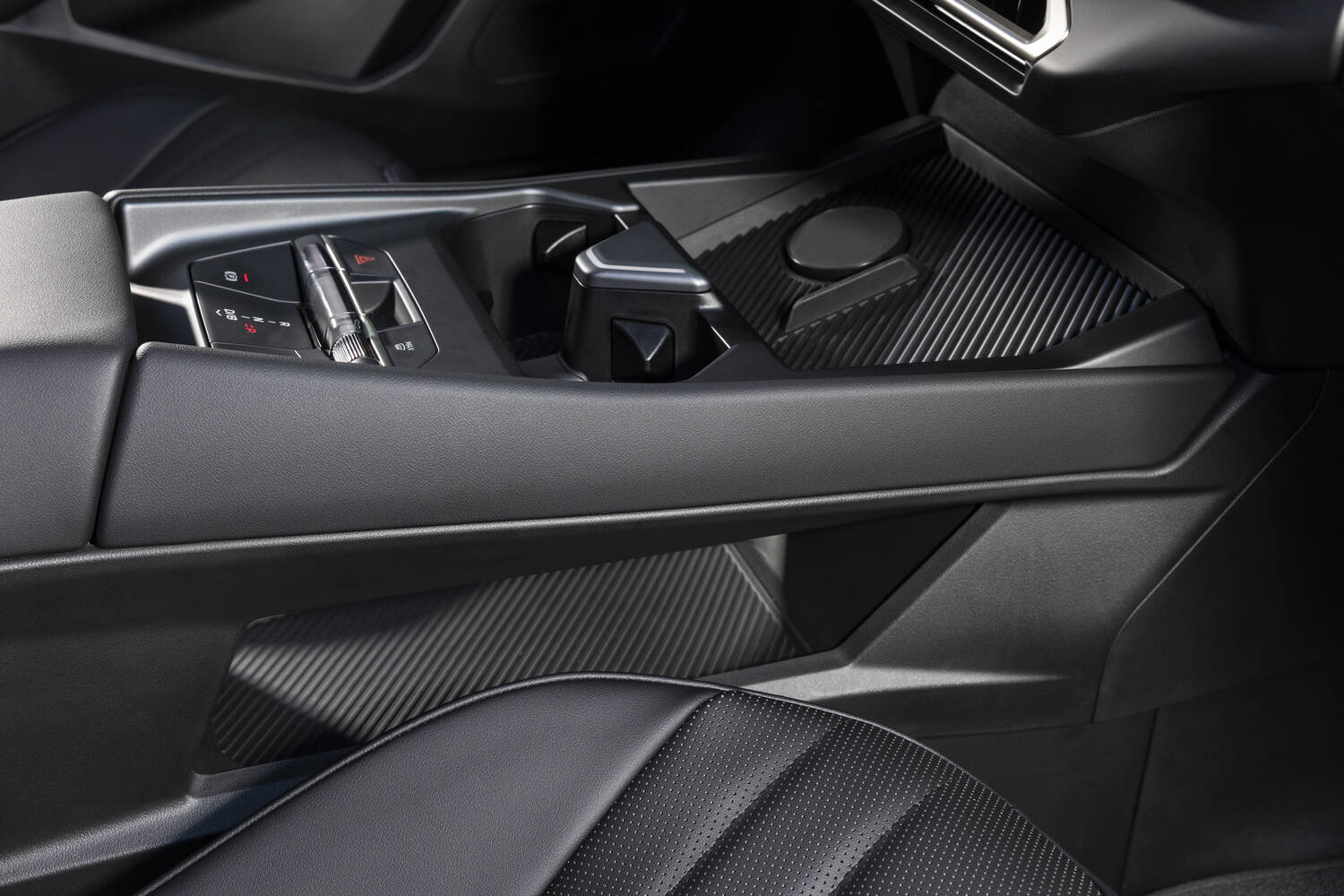
Up front, thanks to its completely flat floor and the absence of a transmission tunnel, the BMW i3 has an under-dash storage area.
This is on top of a pair of cupholders and a large, covered cubby beneath the armrest on the centre console, a fair glovebox and good-sized door bins that can hold drinks bottles.
Rear-seat passenger space
A difference between the i3 and the 3 Series petrol cars is that the former has a slightly longer wheelbase (the distance between the axles) by 37mm in order to accommodate its floor-mounted battery pack, bringing it to almost 2.9 metres in total.
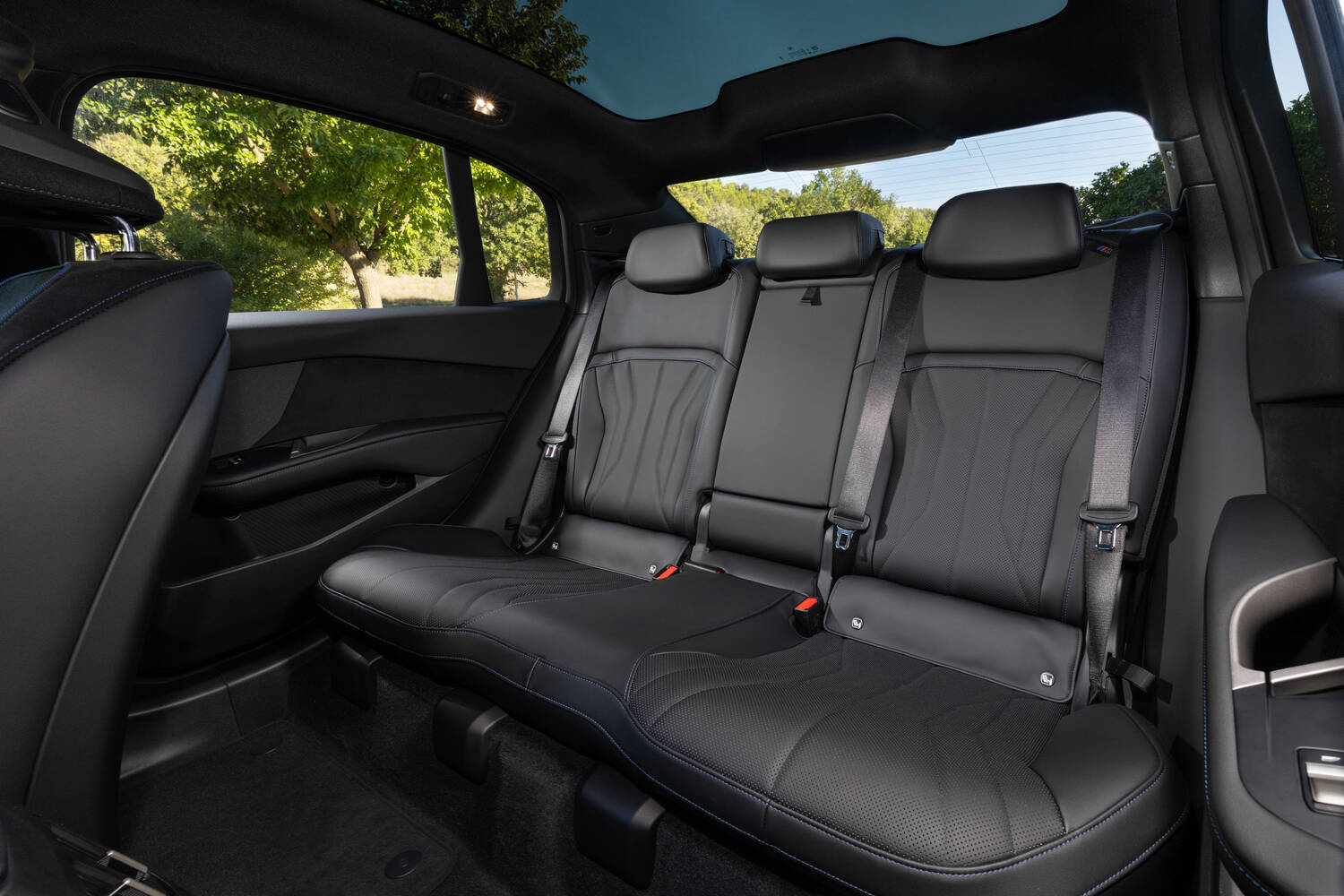
And yet, space in the back of the i3 isn't as generous as we were hoping. There's an issue getting feet underneath the front seats, if occupants sitting up there have dropped them to their lowest position, and there's a feeling that the bench's squab is too low, leaving thighs angled upwards if you're taller.
Still, there's decent leg- and headroom in the second row, and that flat floor means the i3 is better suited to transporting five people on shorter journeys than a combustion-powered car with a transmission tunnel would be.
Other features in the back of the i3 include a couple of air vents, a fold-down centre armrest incorporating two cupholders, heated-seat buttons and USB-C ports on the rear of the front centre console, and more generous door bins for the storage of loose items.
There are no elasticated map pockets on the backs of the front seats, though.
Fitting child seats to the BMW i3
Two ISOFIX positions are provided on the outer two seats of the BMW i3's rear bench, and there's enough legroom and reasonably large rear doors on the car to make loading in bulky child seats a straightforward process.
Boot space in the BMW i3
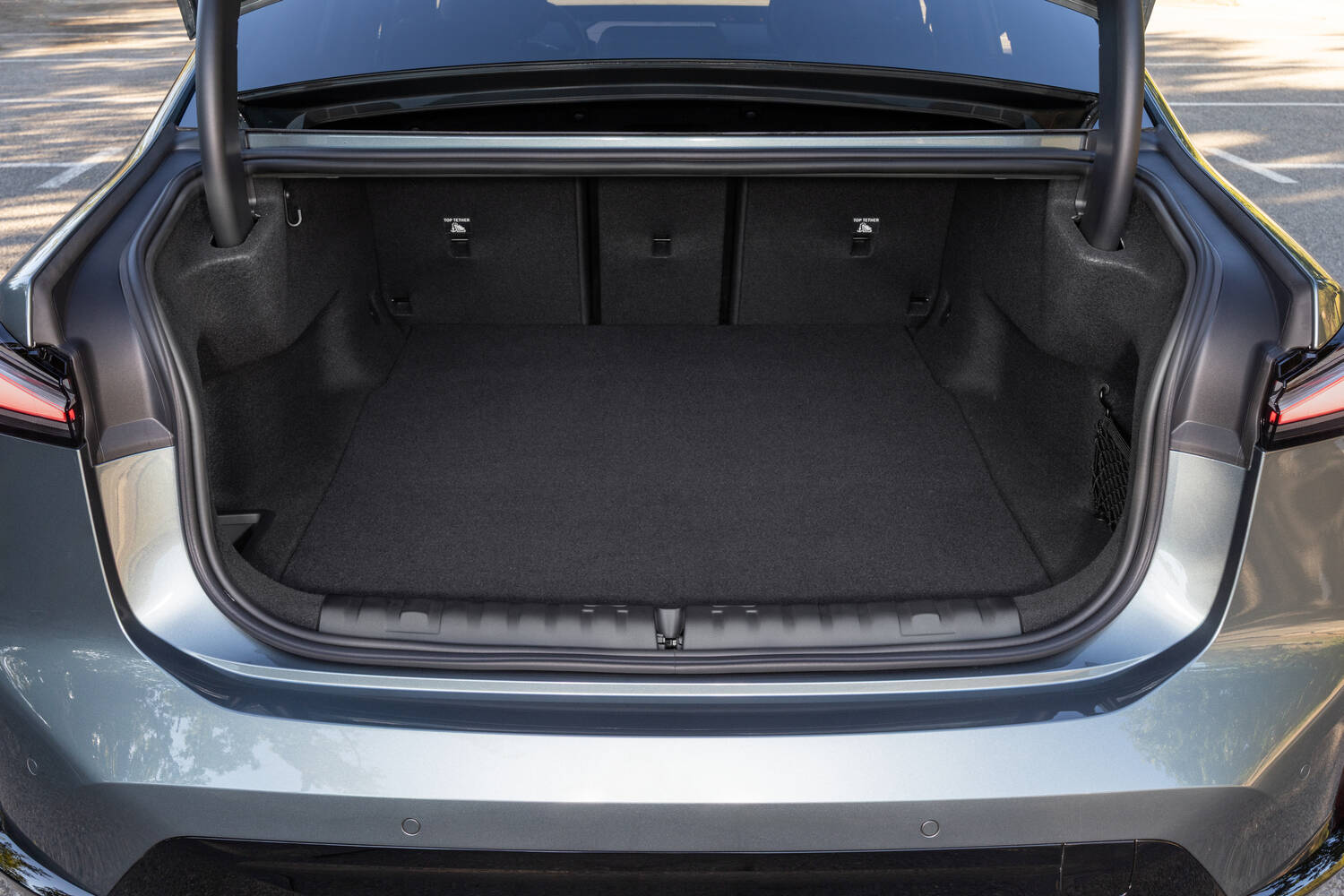
BMW provides 420 litres of main storage space in the i3, which - for a four-door saloon - is a healthy amount of volume.
A through-load hatch in the middle portion of the 40:20:40 split-folding seatbacks further improves its versatility, as does dropping down the rear seats for the transportation of longer, larger items if necessary.
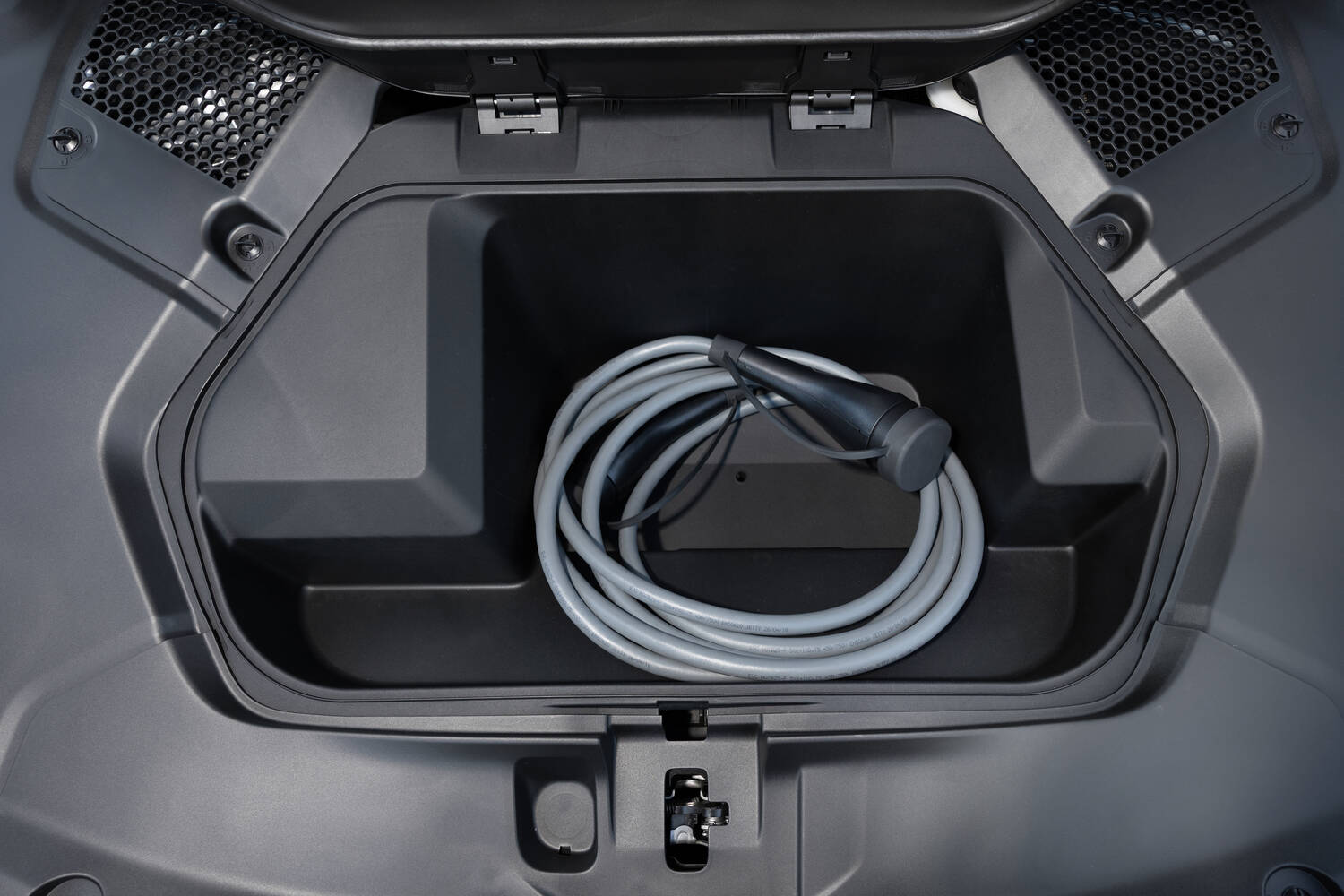
Under the bonnet up front, there is a further 31 litres of storage capacity for charging cables and so on, which is handy because the main boot in the i3 doesn't have an awful lot of features within its confines - and there's no real underfloor stowage of which to speak.
Safety in the 2027 BMW i3
The BMW i3 hasn't been tested by Euro NCAP, although the closely related iX3 electric SUV has and it picked up the full five stars - under the assessment body's stricter 2026 regulations as well.
We'd expect the i3 to do the same, as its standard advanced driver assistance systems (ADAS) safety roster includes lane keeping assistant, side collision warning with steering intervention, cross traffic warning with emergency braking function, and emergency brake assistant with evasion assistant, among more.
All BMW i3s come with adaptive cruise control, Driving Assistant Plus and Park Assist with a reversing camera with a panoramic view function as standard.
Performance of the 2027 BMW i3
- Choice of two power outputs
- All are dual-motor, all-wheel-drive cars
- Super-smooth and relaxing to drive
BMW launched the i3 with two derivatives, the 40 xDrive and the 50 xDrive. The former has a smaller battery, along with some power and performance differences.
The BMW i3 40 xDrive is a dual-motor, all-wheel-drive model. It delivers system outputs of 374hp and 520Nm, allowing it to run from 0-100km/h in 5.4 seconds. The stated kerb weight of this i3 is 2,165kg.
The 50 xDrive has the same twin-motor set-up, but increases the peak numbers to 469hp and 645Nm, which is enough to trim the 0-100km/h time to 4.7 seconds, despite the fact it's heavier - the BMW comes in at 2,280kg in this specification.
Driving the BMW i3 50 xDrive M Sport on French roads
Words by Matt Robinson on 29 October 2026
The first thing to point out is that the German-registered i3 50 xDrive BMW laid on for us in France was running on standard suspension - that means it is passively sprung and damped, although adaptive shock absorbers are available in the i3 and 3 Series family.
We start with this because we'd be thrilled to try an adaptively suspended i3 if this regular car's showing is anything to go by. Undoubtedly, the BMW's chief dynamic strengths are its tremendous rolling refinement and exceptional ride comfort.
Our test car also had optional 20-inch wheels and yet these did nothing to spoil the EV's composure anywhere. It didn't thump and bang through imperfections at low speeds in town, it stayed serene and comfortable on faster-flowing country roads and it was truly imperious out on the motorway.
Aiding and abetting this fantastic ride quality was an almost total negation of any external noise contributors. Even running at 130km/h on French autoroutes, wind, tyre and suspension sounds were kept to the barest minimum, so the i3 ended up feeling like a far grander, far more expensive car than it actually is already.
It's never pillowy-soft, though, and that speaks volumes about the 3 Series' sporty-driving nature, a trait BMW would like to preserve even as the car now enters the all-electric era.
To a considerable extent, this decision has worked. Body and wheel control on the i3 50 xDrive is straight out of the top drawer, while the steering deserves the highest praise too - it's geared and weighted almost precisely how you'd want on a compact saloon like this, so the BMW always feels agile and alert, and yet it provides some genuine feel about what the chassis and tyres are up to during quicker cornering.
We also adore the progressive, strong and oh-so-smooth brakes, as well as the linear nature of the accelerator pedal.
Even when you deploy the full hit of 645Nm in the i3, it is never violent in its acceleration, yet it's undoubtedly seriously swift when it is delivering its full electric grunt.
And yet, ultimately the 2.3-tonne weight does just blunt the i3's handling abilities, although you have to go to extremes to provoke it.
When grip is lost, it's the front of the car which washes wide first, while it always feels rather four-square and tied-down, rather than playful and hinting at any tail-happy antics.
We'd nevertheless still say that the i3 50 xDrive is one of the best electric cars to drive out there, and if you want more from its chassis then you might have to wait for the incoming high-performance M60 variant.
Or go for the charismatic petrol-fuelled BMW M350 xDrive, if you prefer - and you have deep enough pockets.
One thing to end on here is the Motorway Assistant, which we mentioned earlier. We'd advocate you watch our video on the car for an explanation on how this amazing technology works, but in short, it's brilliant and it eliminates all the drudgery and stress from doing the long, hard slogs of kilometres on end at a time on the motorway. It's another major strength of the BMW i3.
Range, battery, charging and running costs of the 2027 BMW i3
- Two battery sizes offered
- The bigger one delivers unmatched range
- Rapid charging on DC connections
The BMW i3 is on an 800-volt platform with a choice of two battery packs - the larger providing industry-leading EV range - but also incredibly rapid charging speeds on a suitable DC connection.
Battery options and official range
Both batteries in the BMW i3 are nickel-manganese-cobalt (NMC) in chemistry, with the 40 xDrive using an 82.8kWh battery.
This confers upon it an official range of 710km, which is exceptional by the standards of most EVs on sale - except for the very car sitting above it in the lineup.
The i3 50 xDrive deploys a ginormous 108.7kWh NMC pack, which in turn results in an official range of 912km.
At the time of writing, that makes the BMW i3 50 the longest-legged EV of them all on sale, no matter their size, type or price point.
Real-world range and efficiency of the BMW i3
We were driving the i3 50 xDrive fairly exuberantly on some sensational roads through the scenic hills of Provence, and throughout it all we had the climate control running, as well as functions like heated seats and the steering wheel engaged too.
Conditions were cool in the south of France, hovering in the mid-teens for temperature and with the threat of stormy rain on the horizon.
In this scenario, and across a 150km driving loop including long sections running at an economy-sapping 130km/h, the BMW used an indicated 19.3kWh/100km. That equates to a real-world range of 563km... when driving in a highly inefficient manner.
So we have little doubt that, driven more sensibly and with a greater proportion of town driving mixed in, getting 600-750km from the i3 all year round without any significant modification of your driving style ought to be a cinch.
Range anxiety? Pah! It's a thing of the past with this car.
Charging up the BMW i3
The BMW i3 40 xDrive peaks at 300kW on DC, while the 50 xDrive with its larger battery maxes out at 400kW on DC.
Either way, due to their different capacities, both take 21 minutes to charge from 10 to 80 per cent in ideal conditions.
BMW also provides the option of 22kW on three-phase AC if you want it, for a fee, while at 11kW on AC (the standard peak) the 40 should take eight hours 15 minutes for a full (the company states 0 to 100 per cent) charge, while the 50 would require 11 hours for the same cycle.
On a typical 7.4kW home wallbox, something like 12 hours would be needed to completely replenish the i3 40's battery, while a 50 owner would be looking at around 15 hours and more.
Servicing the BMW i3
The BMW i3 has an onboard monitor that will dictate when the car requires maintenance, depending on your driving style and usage, and trips to the service centre can be as far apart as two years or 30,000km.
Inclusive service packages are also available, for up to five years with unlimited distance, on the payment of a one-off lump sum.
BMW i3 warranty
BMW Ireland's standard warranty on all cars is for three years with no distance cap, with roadside assistance thrown in for the duration.
As an EV, the i3's high-voltage battery pack is covered for up to eight years or 160,000km, whichever is triggered sooner.
Irish pricing & rivals to the 2027 BMW i3
- i3 starts at around €60,000
- Even a 50 M Sport is less than €70,000
- Few rivals can match its all-round talents
Due to our CO2 taxation, and despite its high-tech nature, the BMW i3 is cheaper than the least expensive petrol 3 Series - by quite some margin, too.
That only serves to deepen its desirability, while the long-legged 50 xDrive isn't a huge price-walk from the 40, either.
There's a basic specification, but we suspect almost all Irish i3s will be in either M Sport or M Sport Pro trims, both of which come with an extensive equipment list from the factory.
As to competitors, the Mercedes C-Class Electric is the principal rival, but as yet Audi hasn't got anything similar on offer, the Polestar 4 is about the closest analogue from Sweden, and then you're looking at some budget Chinese alternatives instead.
And, as we've said, not one of these can get anything like close to 912km from a charge.
Verdict - should you buy the 2027 BMW i3?
The BMW 3 Series has been so dominant in its segment for so long that people tend to refer to all the competition as 'BMW 3 Series challengers', indicating its unparalleled superiority.
Well, get ready to christen it the 'BMW i3 class', because - even as an EV - the fantastic German saloon is head and shoulders above the competition. It is one of the finest, greatest and most appealing electric cars on sale.
FAQs about the 2027 BMW i3
Is the BMW i3 four-wheel drive?
Yes, both launch derivatives are dual-motor cars and so is the next variant coming down the pipeline, the high-performance M60. This is signified by all i3s being listed as 'xDrive' cars.
Can the BMW i3 tow anything?
Both the i3 40 xDrive and the i3 50 xDrive are rated to haul up to 1,800kg of braked trailer, if required.
Where is the charging port on the BMW i3?
It is on the right-hand rear wing (the driver's side on right-hand-drive cars), just above and slightly behind the back wheel - and located in the sort of place you'd normally expect to find a fuel-filler cap on a combustion-powered vehicle.
Want to know more about the 2027 BMW i3?
If there's anything about the BMW i3 we've not covered, or you'd like help in choosing between it and other cars, you can avail of our expert advice service via the Ask Us Anything page.